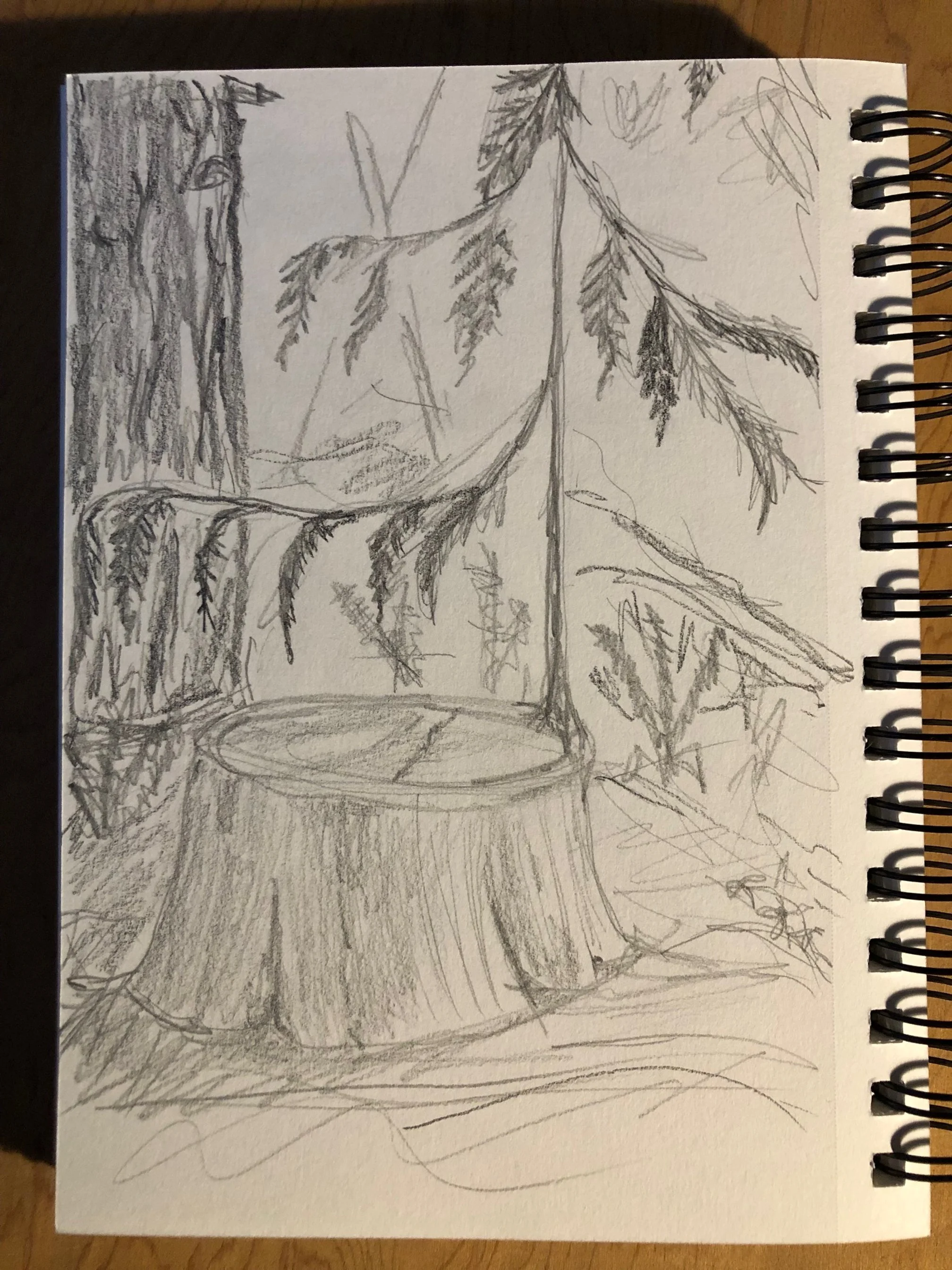
On the Incarnation: Wild Indigo Guild #8 “Your Own Hands”
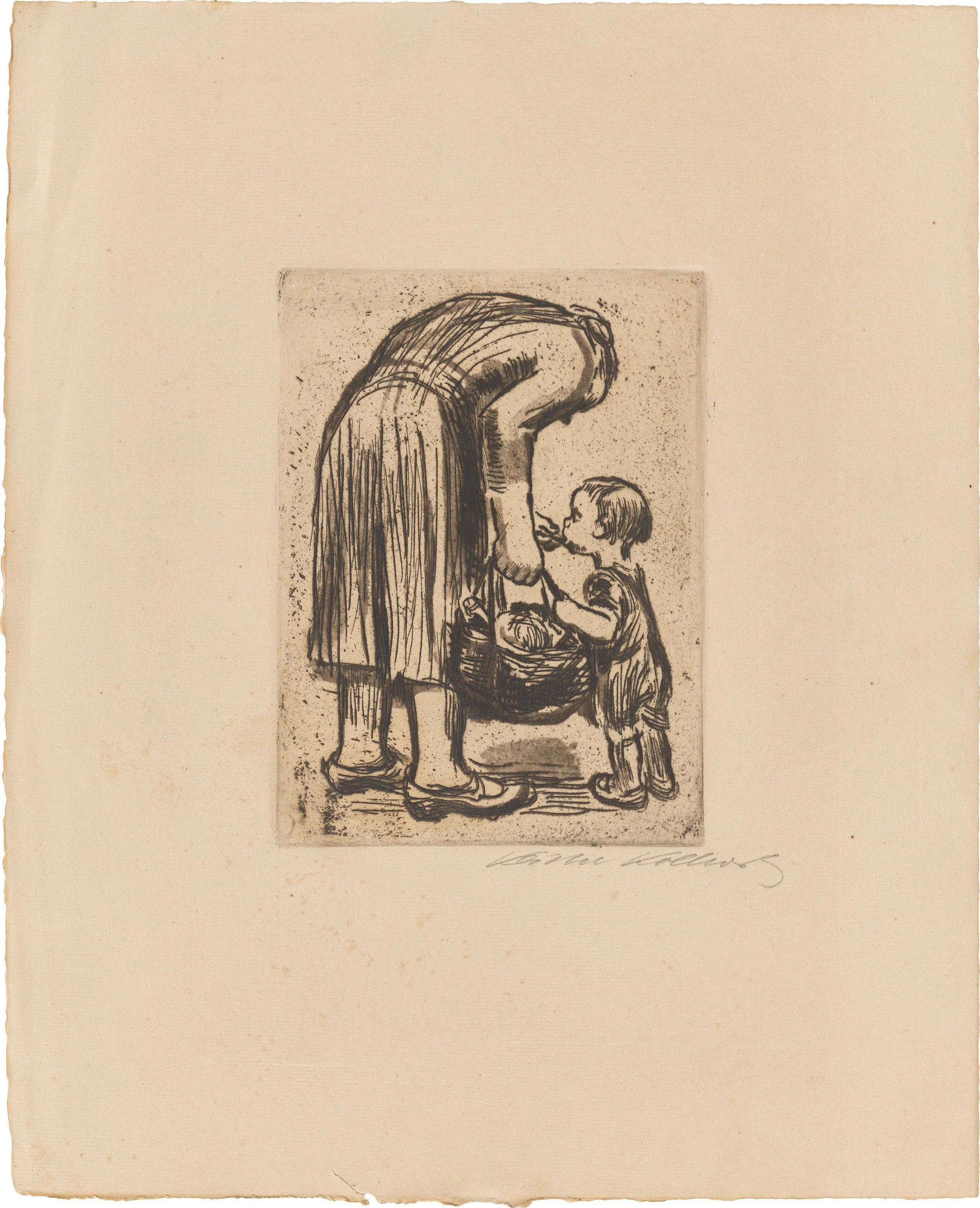
Standing woman feeding her child, Etching. Käthe Kollwitz, Public domain, via Wikimedia Commons
How does God keep in touch with you through your own hands?
What are you often doing when you sense the approach of a sense of inner quiet, a making-peace within, and a path to do so without, the rise of gratitude, generosity, good energy, confidence, grounded hope, of compassion for self and others?
Some activities can wrap us up tighter than a fiddle string with anxiety, weary us with care and worry, drive us with ego and ambition, or set in a mood to spark with irritation and irascibility. Some activities and involvements indeed become idols, energy and attention draining stand-ins that draw us away from God and our everyday opportunities to show-up in compassion, faithfulness, humility, creativity, commitment, care, friendship, generosity, and mutual-help.
But not all. In the midst of some creative works and useful activities of daily living, we find peace, contentment and gentleness in attending to what is at hand. Some works and activities engage our senses, mind, and hearts through the work of our own hands, preparing us to receive a moment of contemplative quiet, new perspective on a difficult situation, or a child unexpectedly bidding for our love and attention.
And if you can put down the knitting, whittling or bill-paying, and turn to the one who approaches you with kindness, openness of heart, listening and joy, then you have known the presence and working of true prayer.
And we need to see and lift up those things in our lives, whether they are creative pursuits, activities of daily living, or vocational tasks done well, as key places where God draws near, and we ‘practice the presence of God.’
In the Wild Indigo Guild formation pathway, we move through 8 themes, or gateways to experience and learning, arriving at the eighth and final theme-Working with your own hands. (1 Thess 4:11)
We might expand the quote a bit more, and say working with your own hands as a participant in God’s work of holistic restoration and new creation here and now.
We want to help one another (re)gain a sense of confidence in our ability to act in a restorative and healing way for the earth.
Many of us absorb enough voices that prophesy doom, such that what we humans then imagine that we can do little or nothing in the face of such global issues as climate change or biodiversity collapse. Or we get used to the thought on offer that humans are the problem, so it would be better if ‘we’ didn’t exist. And so anxiety and despair oppress us, fueled by what some modern therapies, and the desert fathers and mothers, would call “bad thoughts.”
Or we are handed a narrowed band of effective actions, such as individual consumer choices, or performative activism. We need better choices for consumption and political action. But when narrowed, these don’t hold out much for people who don’t already practice skills and codes for civic engagement with confidence, or possess the wealth to go out and buy a new electric car. Such frames for perception and options for action can deplete our own senses of “power, the ability to act,” leaving us less organized internally and externally for right action and generative work, less in touch with the truth of ourselves and of God.
Instead, the work of our own hands, undertaken in community and guided by inner truth, can be fruitful and life-changing today for you and the earth. And we can trust that as we begin again with what your hands know how to do, and with the peace of God which passes all understanding, a long-term, indeed eternal horizon, guides our steps. And humans made of earth, breathed with spirit, belong with God and the whole creation.
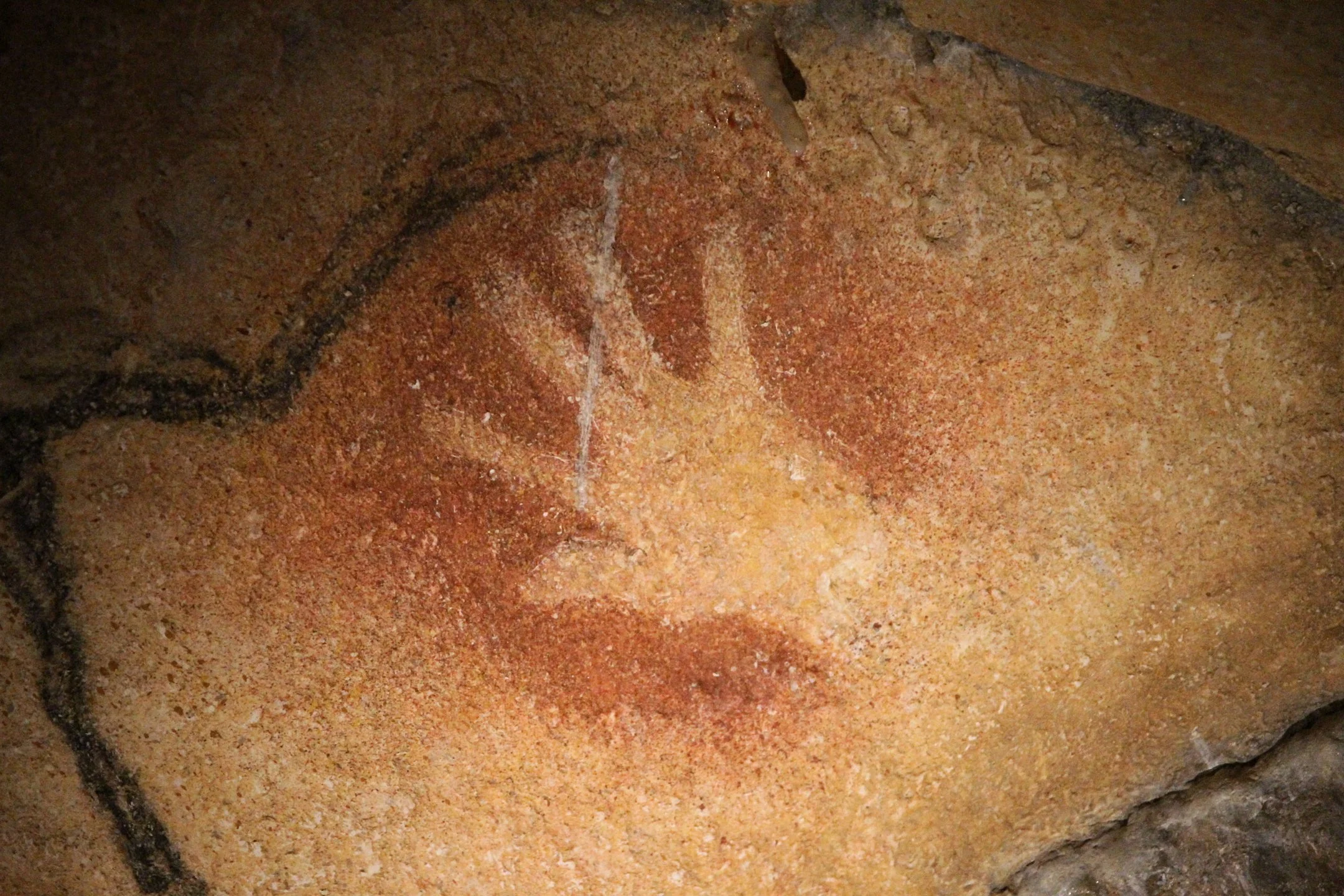
Hand from Chauvet Cave, copy, Claude Valette, CC BY-SA 4.0 <https://creativecommons.org/licenses/by-sa/4.0>, via Wikimedia Commons
And so, we ask for God to illumine those activities within your reach, to which your hands return, which call you forward with a sense of wonder, love, commitment and delight. Those works of your own hands promise a taste of peace and inner quiet, which allow your heart, mind and whole being begin to find a way forward, even, maybe especially in difficult situations. Such work of your own hands can bring true prayer, and a grounded sense of connection with body, earth, the holy One. Being so grounded, we may also receive a spirit of discernment and right action.
And such prayer may also be the work and prayer God has given you in order to participate in the divine work of salvation, the healing and restoration of humankind and all creation. What starts as picking up trash in a vacant lot may grow into a dependable habit of showing up for neighbors, and daily noticing what life grows up from the old foundations and street edges and wild corners of the life you share.
At this season of Christmas, (12 days!) we celebrate God drawing near to humankind and all creation in the birth of Jesus Christ. The incarnation means that God came to be with us in such a fashion that Jesus’s revelation of divine-humanity required the care, involvement, skill, thought, joy, mutual aid, boundaries, excess, good judgment, hurry, patience... and love of many other persons.
Where would the infant Jesus, the living word, creative wisdom, have wound up, without Mary and her treasuring heart, which knew wonder and grief, perseverance and poetic acclamation of justice and and God’s ability to act, without Elizabeth, who knew and loved Mary, surrounded her in loving connections and community, and joined her in hope and peace in her waiting, without Joseph’s commitment, roots, readiness for the road, building skill and design prudence, and openness to dreams? Jesus the child depended on the caring, guiding hands of other humans, and their hearts formed in tandem with their hands.
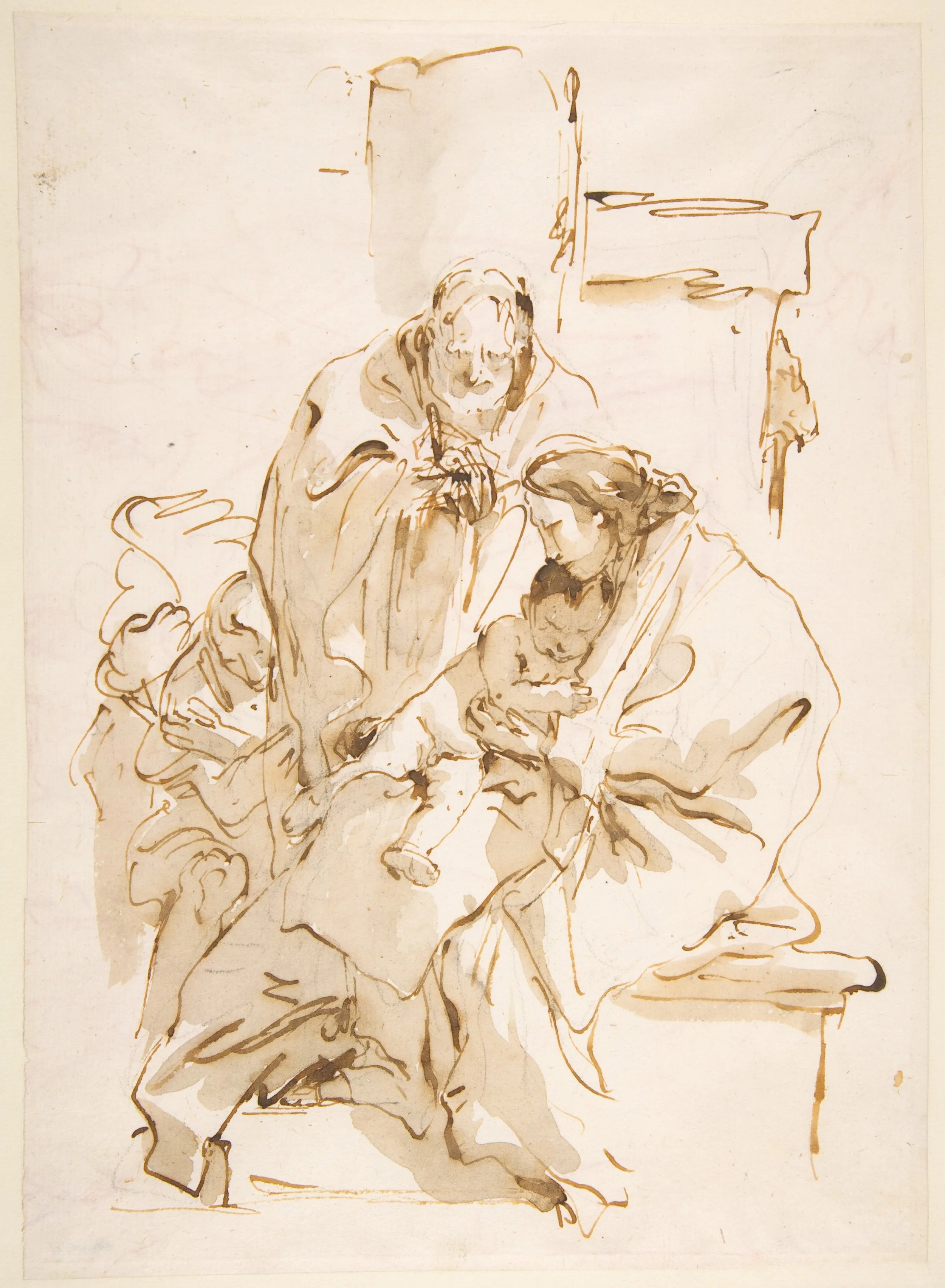
The Holy Family, Giovanni Battista Tiepolo, drawing, 1750s, CC0, via Wikimedia Commons
So, we celebrate who God is and how God is with us and all creation very fittingly in simple little ways, like cutting out sweet cookies in the forms of hearts, stars, animals, and angels. As we savor their sweet goodness, those symbols also draw our hearts upward, in a movement beyond words, to the one who has joined with all manner of matter, and restored the whole creation to a pathway with God.
And we even hear of the coming of God in crisp words and image that could have been spoken by a tree-planter or gardener, who has spent hours of close attention to plants while their hands dug, pruned, and planted.
A shoot shall come out from the stump of Jesse,
and a branch shall grow out of his roots.
The spirit of the Lord shall rest on him,
the spirit of wisdom and understanding,
the spirit of counsel and might,
the spirit of knowledge and the fear of the Lord.
Along with the prophet Isaiah’s wonder-ful glimpse of God, we have heard many such glimpses of the divine one present and at work in the wider creation. And we have heard stories of how that wonder often re-appears as glimpses and as an ongoing companion in the works of our own hands. People tell of those works of their own hands that help them draw near to God, to ‘taste and see that the lord is good.’ What they have shared might help you look to the coming year with a sense of faithful simplicity, seeing more of God at work in you and around you everyday.
Gardening, composting, planting trees, walking, playing music, fishing, hunting, paddling, watching birds, drawing, cooking, weeding, quilting, picking wild berries from the forest edges and vacant corners, folding them in dough in the way your grandmothers hands did, sharing the good from the land with children and elders…
There are many ways that God draws near in the work of our hands.
What about you?
How does God keep in touch with you thru your hands?
How is God calling you to participate in the simple little way of restoring creation?
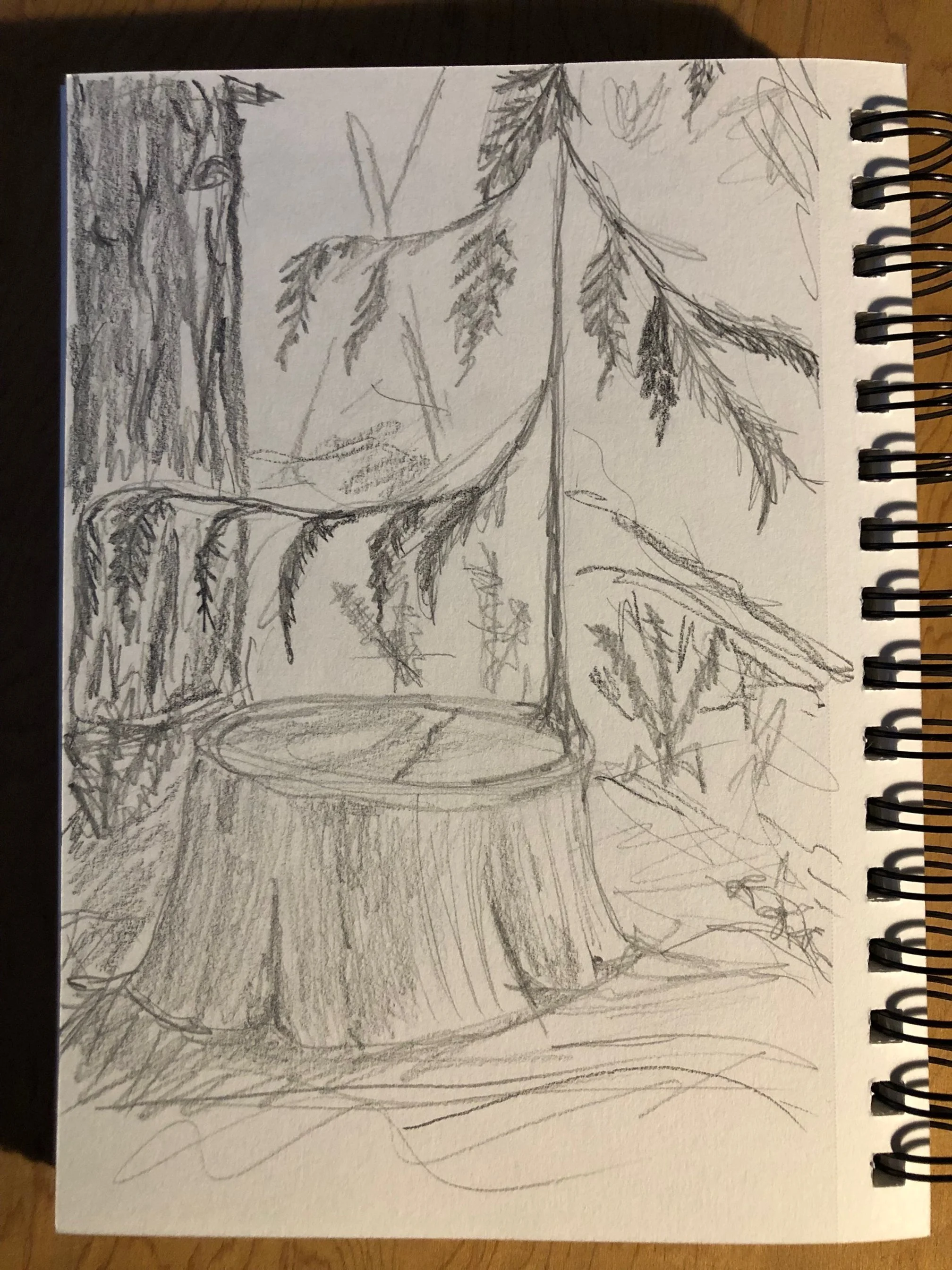
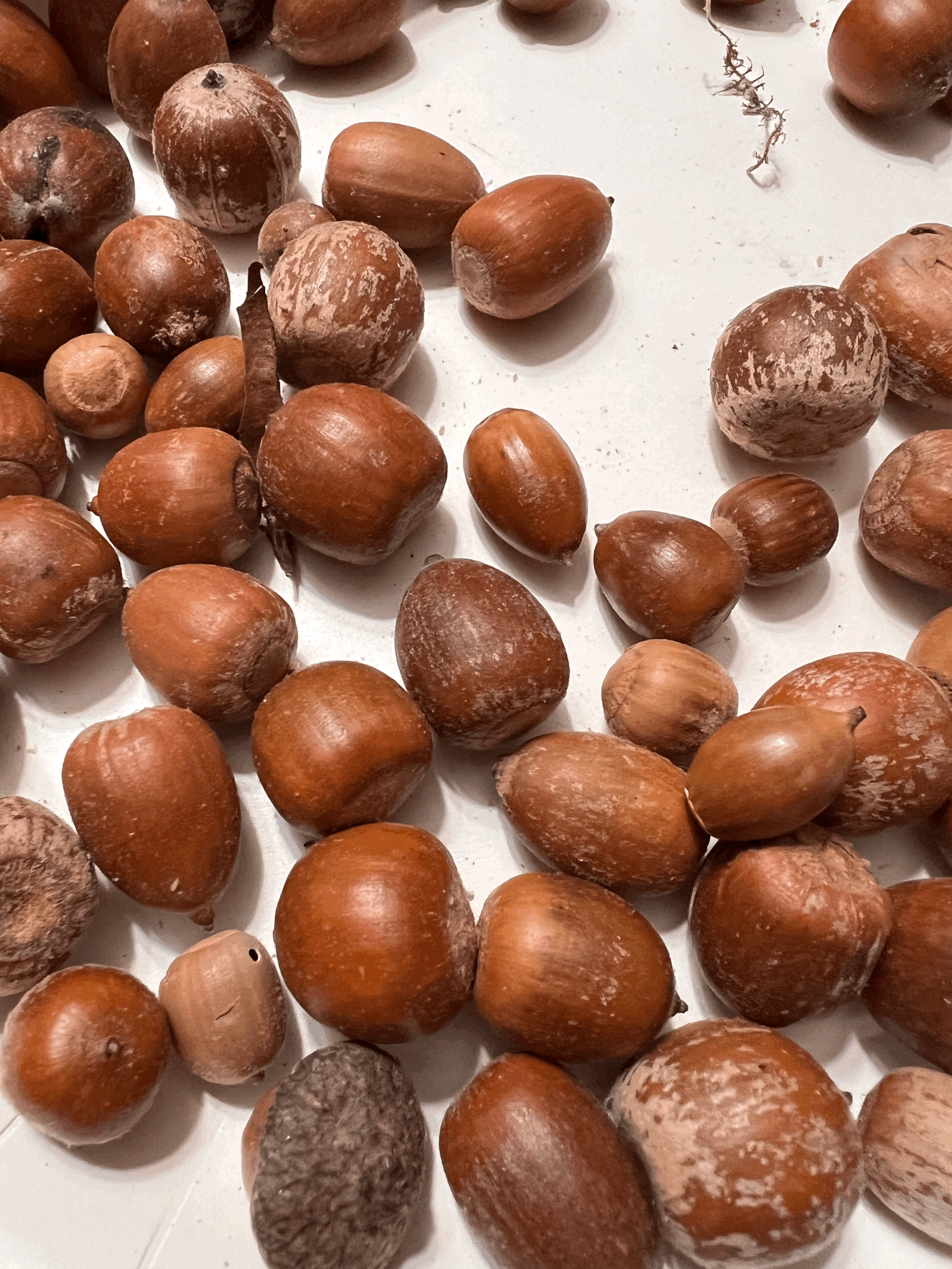
Acorn Abundance!
Last year I (John) was at my last fall retreat with families from The Open Door Church. I’d worked with the church for over 20 years, basically my entire adult life. Most years we would escape regular life for one weekend at a local retreat center. The fall retreat was bitter sweet last year. I had just announced I’d be finishing up my job as one of the pastors in just a few months. Evan and I had already started Wild Indigo Guild and I knew God was pulling, tugging, coaxing me to pursue this new work. I knew Evan had felt the same. I was excited but feeling vulnerable about this next steps God had before Wild Indigo Guild and my life.
I remember collecting acorns on that retreat with a few of the kids. There were some nice white oaks, Quercus alba, outside my cabin, one of my favorite trees in our region. The kids helped me gather more acorns than I needed, plenty. And we all had fun doing it. Kids love foraging. Those acorns, at least some of them, are now tiny trees in pots in my back yard, soon to be planted into larger pots when we start the Wild Indigo Guild nursery in the spring.
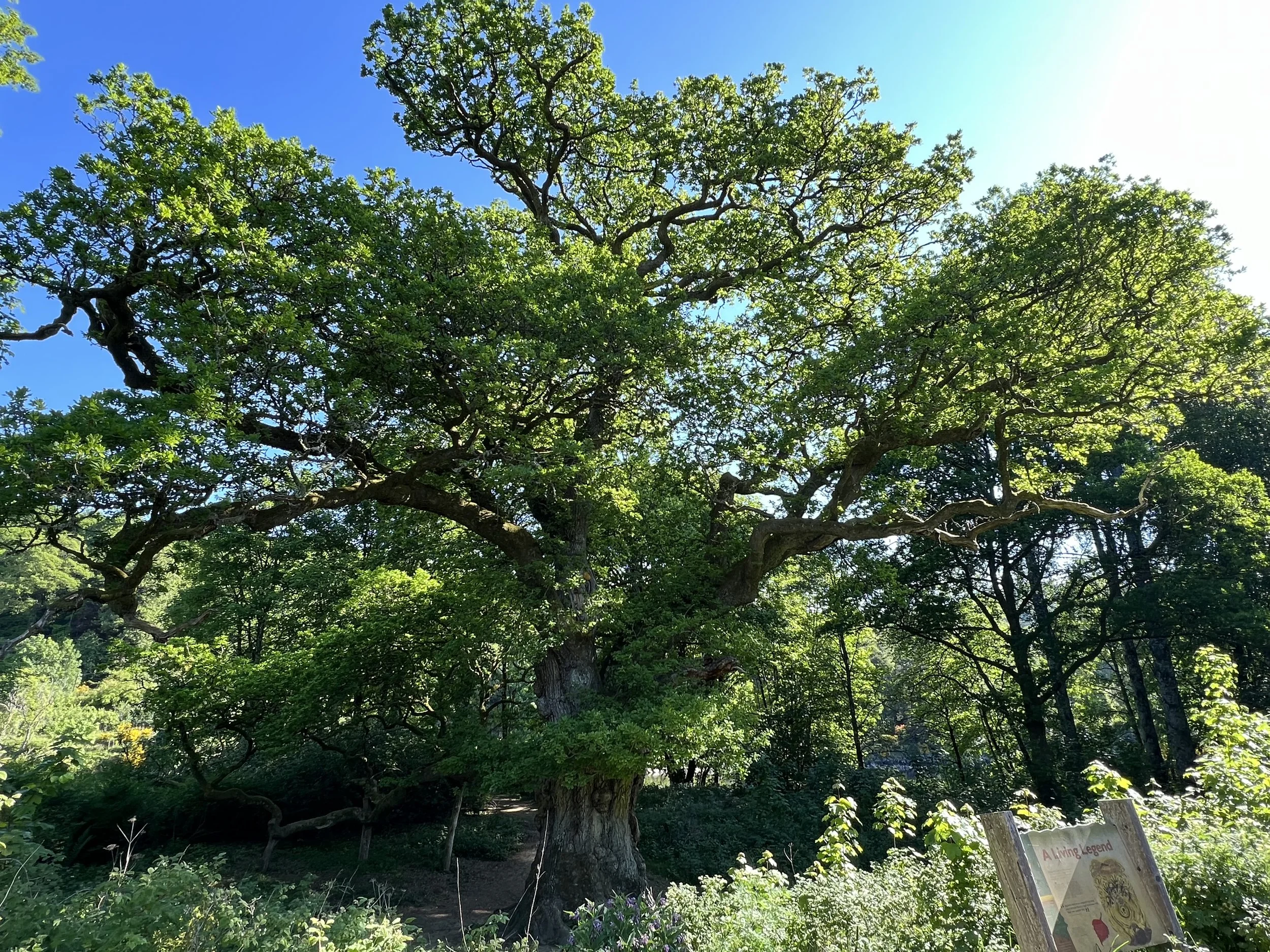
A beautiful and very old Pedunculate oak that Alyssa and I visited last May.
This year the church went on retreat without me, but with their new pastor, my friend, Rev. Jen Freyer-Griggs. When asked what they wanted to do on this retreat some of the kids said gather acorns! And… well… they did. In fact, they made acorn gathering into a full-on thematic event! That meant that I received a wonderful gift of over 10,000 acorns! It should be noted that two or three kids did most of that gathering! I’d love to say we were going to grow them all out and plant 10,000 white and red oaks this year, but we’re not there yet. So, what to do with all those acorns?
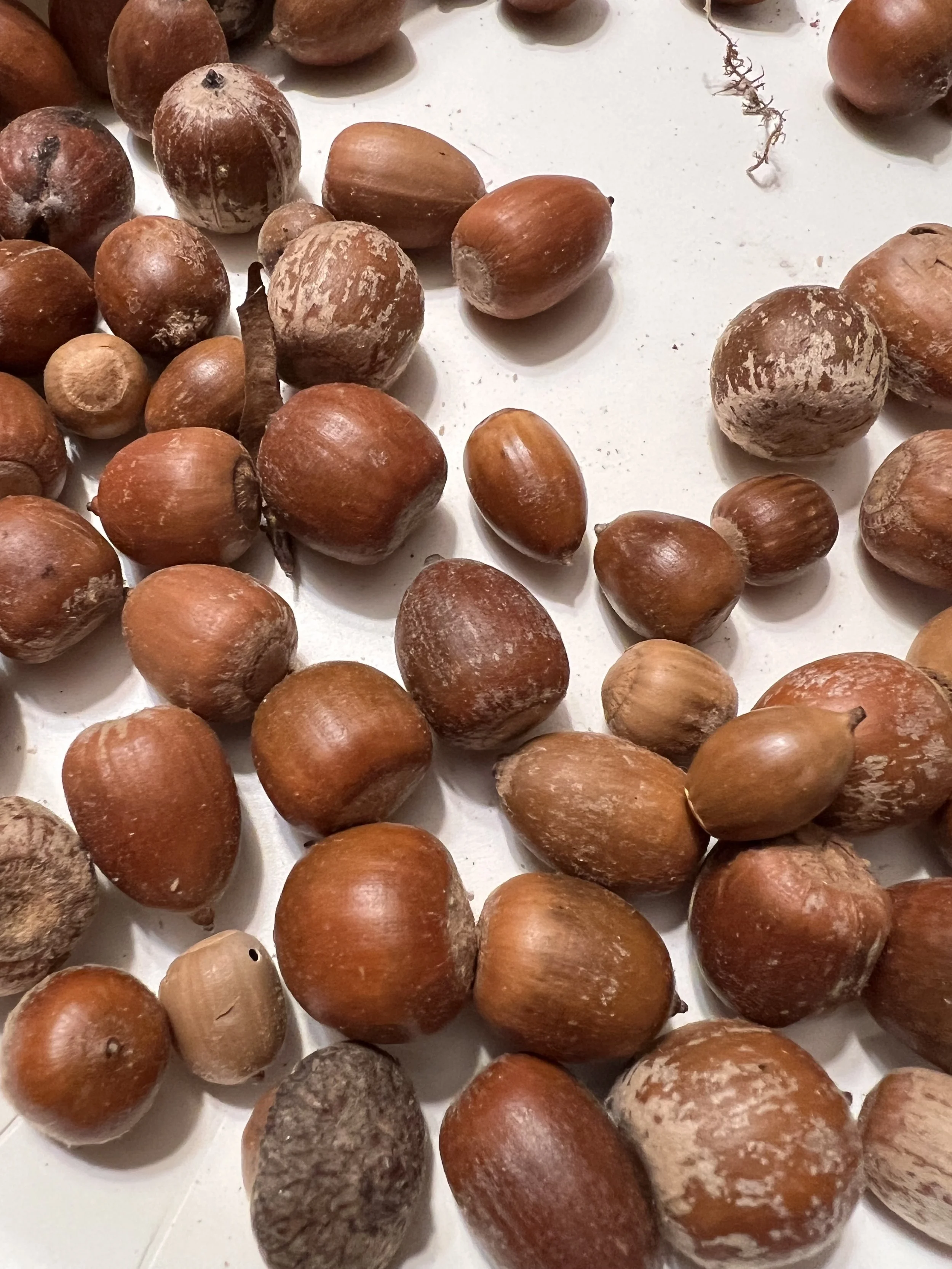
A handful of our 10,000 acorns.
Three easy things you can do with lots of acorns: my favorite… plant some trees, my second favorite, eat them! And the third option, feed them to your goats. If you don’t have goats, pigs like them too. Oh, and if you don’t have pigs, the deer and squirrels in your neighborhood will love them. I’m sure you can think of some other options too.
Native people throughout North America and throughout the world have used acorns for food for millennia. Oaks grow in arid climates, in wetlands, on Rocky Mountain sides, and in the Great Plains of the midwest. They grow from the east coast to the west and have fed people and creatures on this continent since time immemorial. Even Sam Gribbley of my favorite children’s book, My Side of the Mountain, made acorn pancakes. Not only are they great for people and mammals, oak trees support more insects than any other tree, which means they also support the birds the eat those insects. Want to support native ecosystems, plant more oak trees!
Last Saturday our Center Guild gathered for prayer, a wonderful and hearty meal, and to process acorns into acorn flour. We had a great time learning the process and having fun around the table. My plan is to make pancakes, like Sam, for our Center Guild meal in February, as long as we can get enough acorn flour ready for fifty or so pancakes. Our gathering this month was beautiful. As with our first two gatherings, we had almost as many children as we had adults. We gathered at Seedbed Farm in Monroeville, PA. Mark and Courtney Williams own the oldest house in the area, an 18th century log home, and they made it available for us on that cold Saturday morning. Photos don’t do justice to how cozy, warm and inviting their home really is. Before our meal we gathered around the wood stove for a time of prayer, singing of some Advent carols and reflection on the life of Saint Nicholas of Myra in the 3rd century AD.
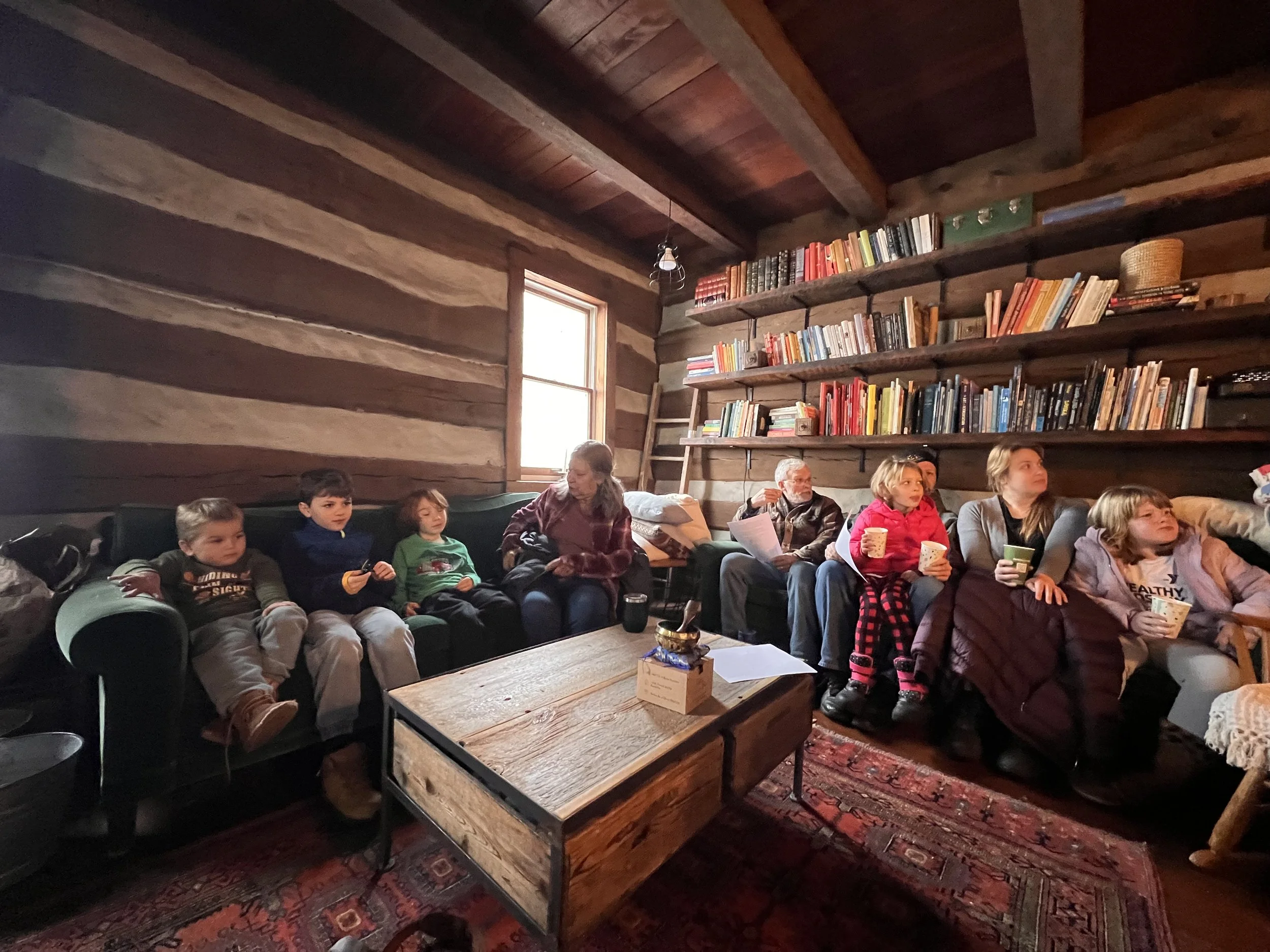
Children and adults listening to Evan tell a story about St. Nick
There were seven year olds and 75 year olds gathered together and participating in prayer and story telling. I’m not sure what folks thought of eating acorns when I shared about the after dinner activity for this month. Acorns represent natures abundance but they aren’t something we eat in our 21st century world. The reality is that our forests provide millions… billions… of extra calories for wildlife and potentially for humans. Acorns represent God’s abundance to me. Some years, called a mast year, oak trees communicate with one another that its a good year to produce huge crops of acorns. These years the trees provide a feast for wild turkeys, deer, squirrels, black bear and many other forest creatures. Once I saw a black bear high up in an oak tree munching and crunching away. In centuries past our forests were also full of chestnuts, not today, but maybe again in the future we’ll harvest acorns and chestnuts each autumn.
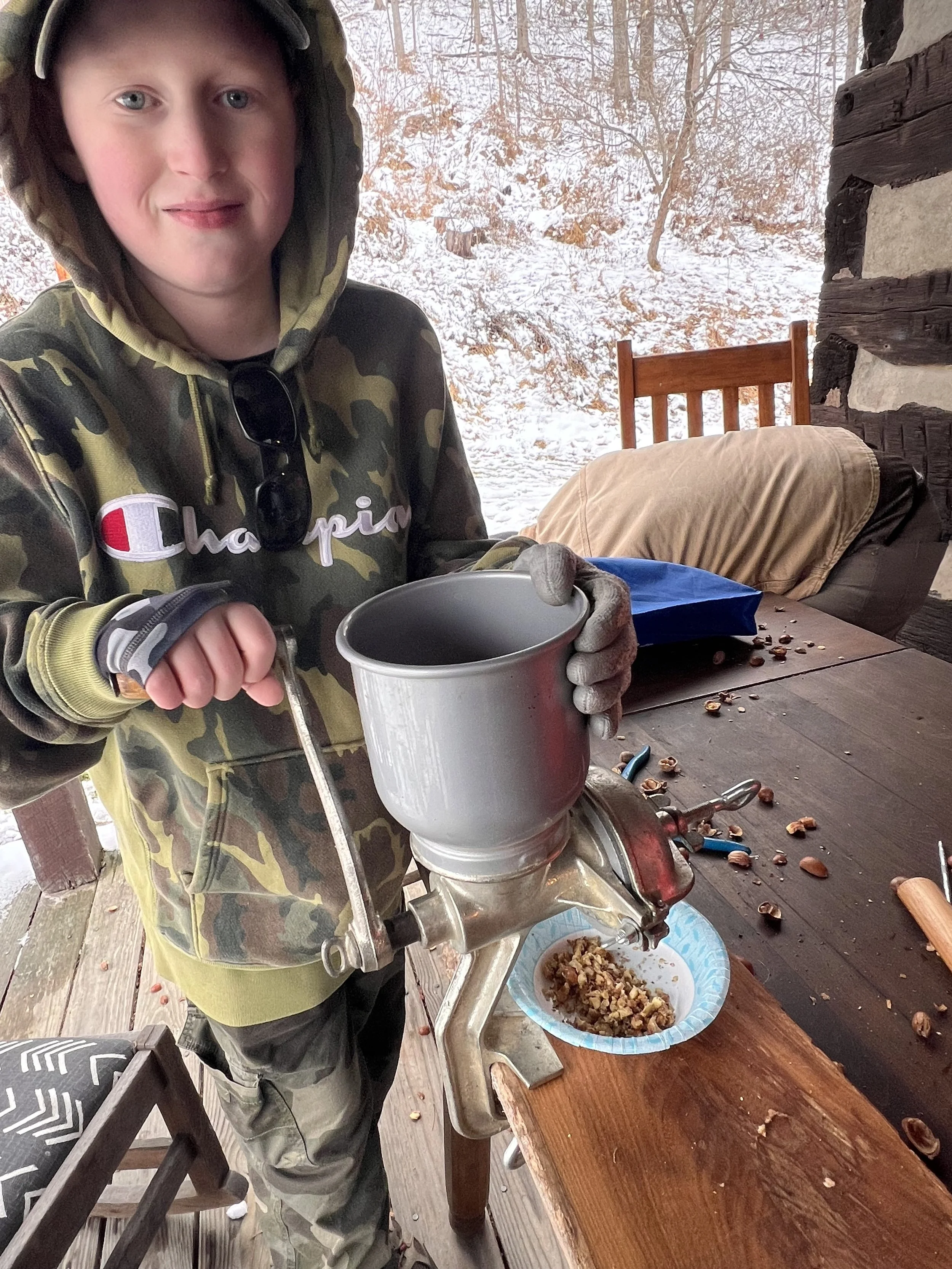
Working together to get our crop of acorns ready to be made into flour was a great, all ages, all abilities, activity. The work of our hands to create healthy food for one another is what we’re all about. The work of our hands was a celebration of God’s abundance in our lives as we close out 2025, as we look forward to the birth of Jesus, as we remember the generosity of Saint Nicholas of Myra.
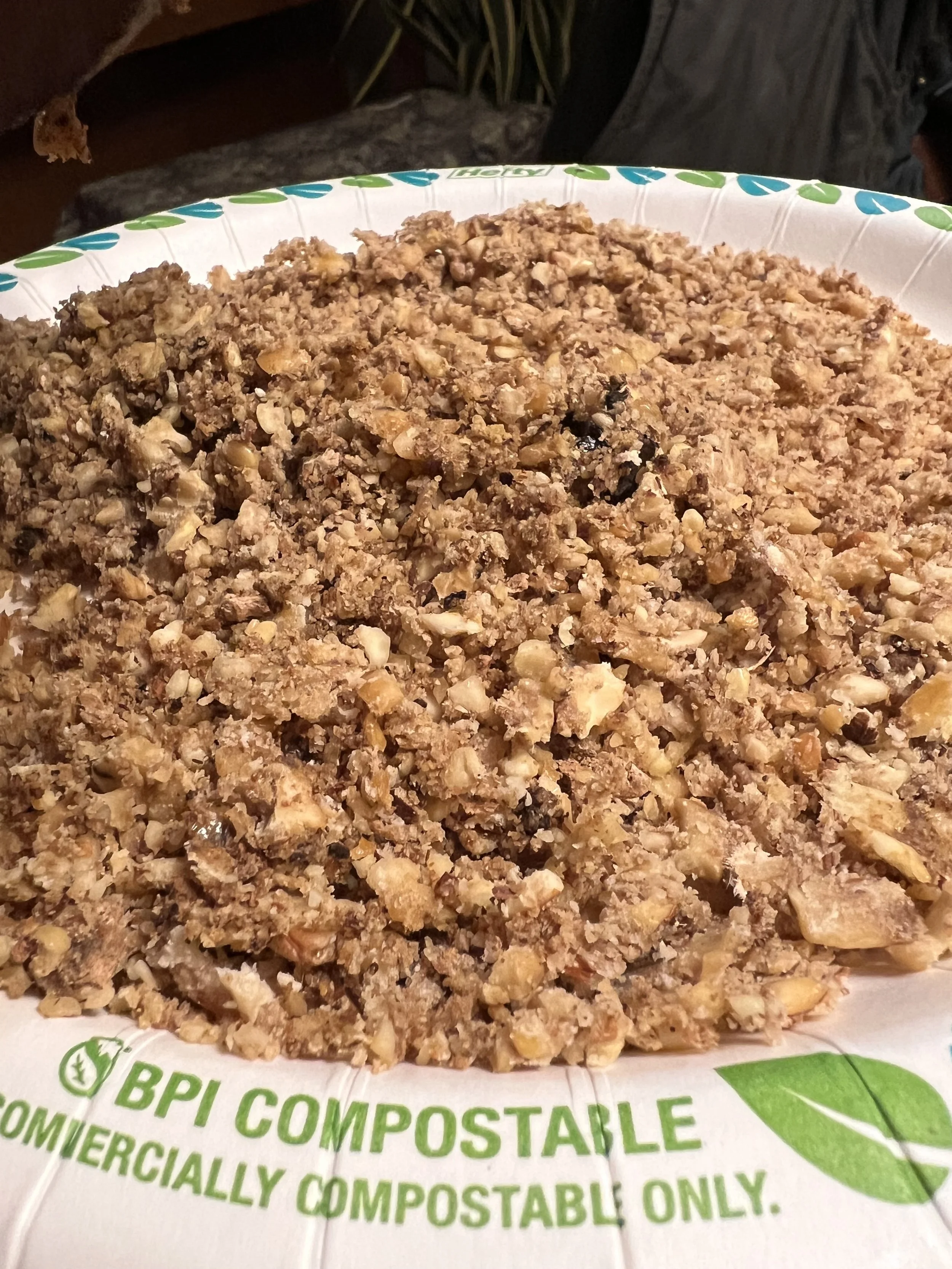
Acorns after the rough grind but before soaking.
Later Evan and my two sons continued this process in our dining room, removing the shells and grinding the acorns. And we still have so many acorns to go! Some for the goats and some will be planted.
It’s not hard but it takes time to process acorns and soak the tannins out of the nuts. The soaking happens after the process we did together last Saturday. It takes several days and many changes of water before the four is ready for its second grind. Tannins are very bitter and actually work as an anti-nutrient in the human body, absorbing nutrients from the body. Tannins have to be removed before we can eat them, not so for all those other creatures. But, after leaching out the tannins acorns provide healthy unsaturated fats, protein, calories and lots of nutrients. It’s one thing to harvest wild greens or mushrooms from the forest, acorns and other nuts can provide the foundation of calories we need.
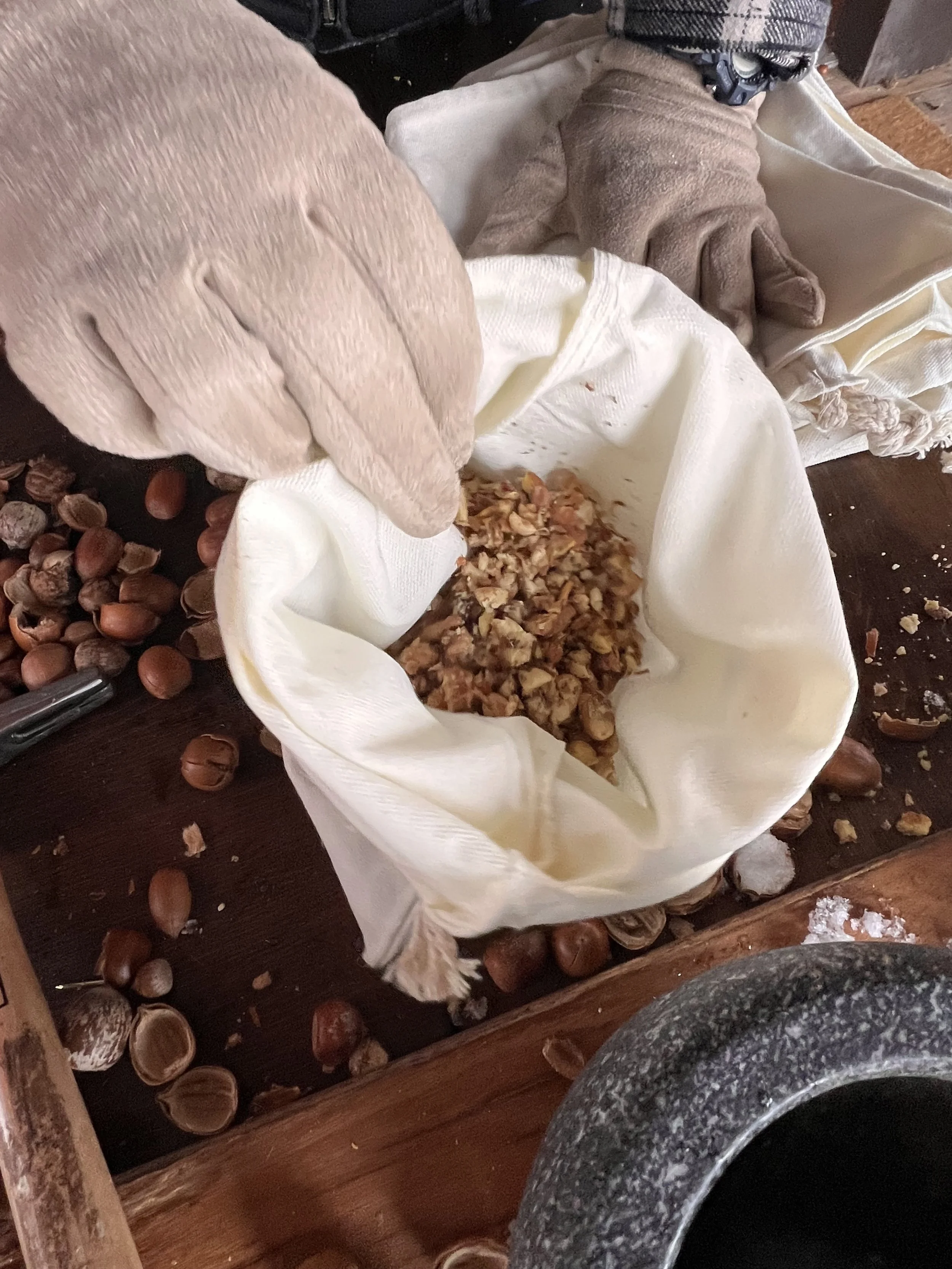
Acorns ready for soaking to remove the tannins.
Here’s our process we used to make flour.
Crack the acorn shells. I like to us a mortar and pestle. We also tried out hammers and pliers, but the mortar and pestle was by far my favorite. The shells crack easily and the net can be removed pretty easily. Some nuts are discovered or even black. Throw those ones out. If there’s a worm, that’s ok, just toss that one into the woods too.
Course grinding of nuts. After the shells are removed we put the nuts into a hand cranked flour grinder. I bought my in a tiny village in rural Mexico. Its for grinding corn to make tortillas, but it’s great for this too. I adjusted the grind so the nuts are still a little chunky, but pretty small. I don’t want fine flour yet. We tried it and the found the finely ground nuts are harder to handle during the leaching process.
Leaching the tannins. We’ve tried two methods of cold leaching the acorns to remove the tannins. One option is to put the ground acorns in a muslin bag and soak them in a bucket of water. We change the water twice a day. This seems to work well, it’ll take about six days. The second method is to use a mason or fido jar. Just put the acorns inside with water. I then strain the water out twice a day using cheese cloth over the top of the jar. This is easy and seems to work even better and getting the tannins out.
Drying the ground nuts. We use a dehydrator to dry the nuts. We’ll also try out the mantle over the wood stove.
Fine grinding of the acorns. Finally, I put the acorns back in the mortar and ground them finely, making perfect flour!
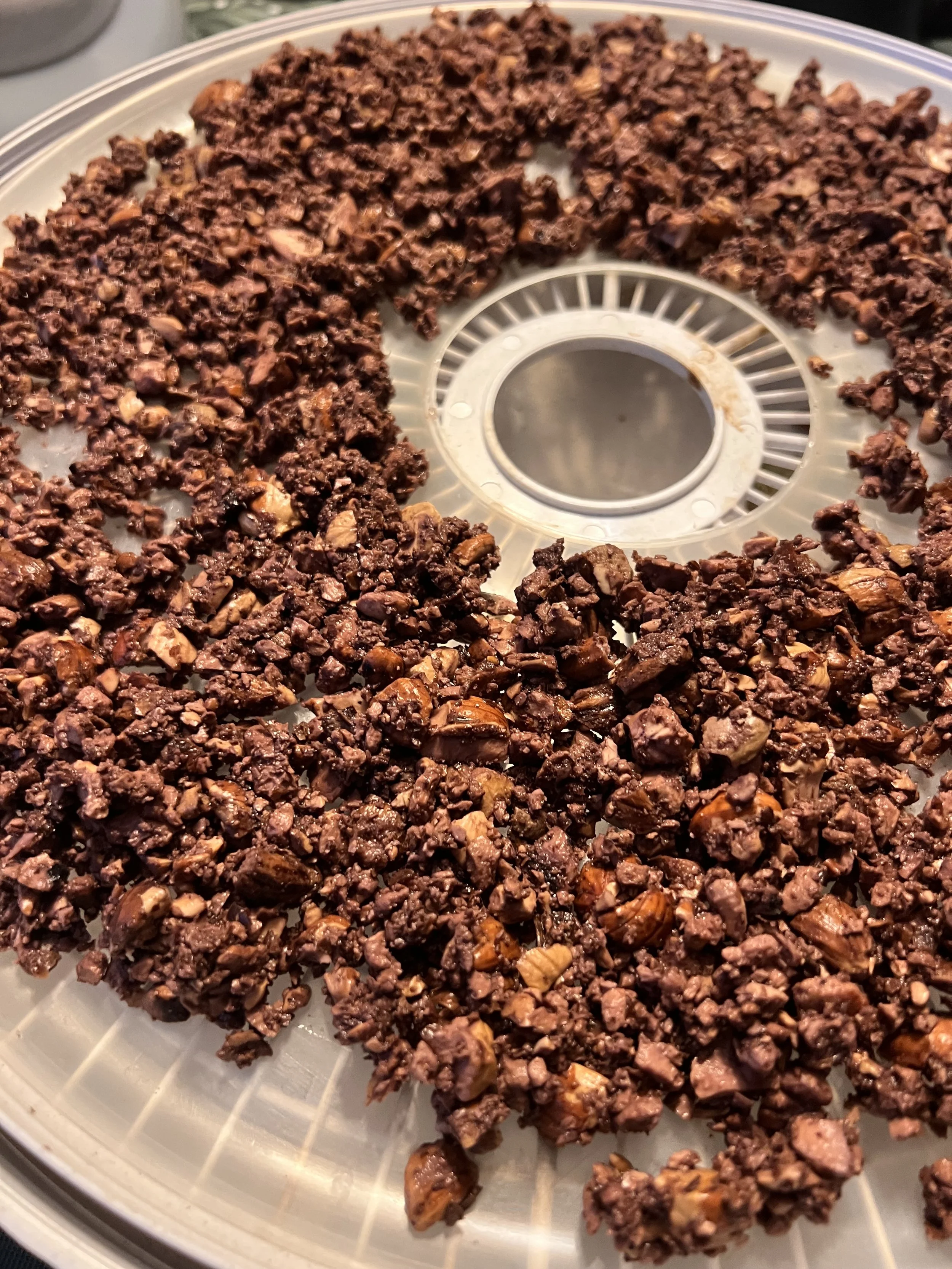
Acorns after being shelled, roughly ground and soaked for six days to remove the tannins. Now ready to be dried in the dehydrator.
Our first attempt at pancakes was a huge success, meaning both of my teenage boys liked them. I simply mixed the acorn flour with a gluten free pancake flour. It worked really well at 1:1 ratio and at a 1:2 ratio as well as a 2:1! meaning the acorn flour is really versatile and tastes great.
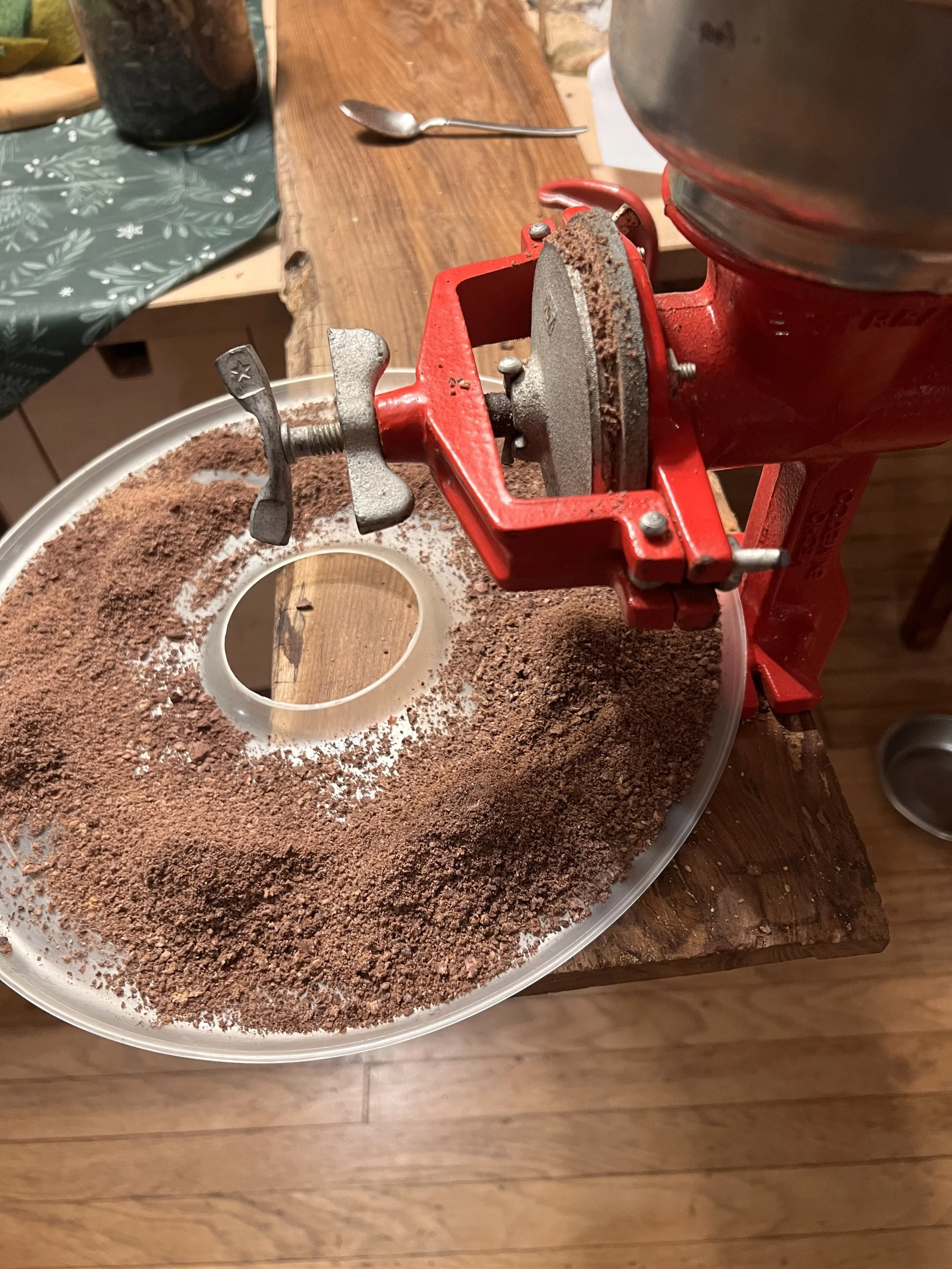
Finely ground and ready for use!
A Reflection on MODULE 7: PARTICIPATE IN GOD’S RESTORATIVE COMMUNITIES
Module 7: Participate in God’s Restorative Communities
By John A Creasy
Module 7 of the Wild Indigo Guild program is one of my favorites to teach. “Participate in God’s Restorative Communities” is our theme. Our idea here is that restoration of creation and of humanity will happen in community and often from the edges, outside of where most people would expect to find power and leadership.
If I’ve learned anything over the past sixteen years with Garfield Community Farm its the importance of community and partnerships. Almost everything we do at the farm these days is in partnership with some other organization, community leader or person in the neighborhood. Our children’s education is in partnership with Brothers and Sisters Emerging, our food distribution is in partnership with Valley View Presbyterian Church, our permaculture teaching is in partnership with Three Sisters Permaculture, etc, etc. It’s not because we can’t do things on our own, but it is because we can do all these things better in community. Our partnerships make us stronger and make our community stronger too.
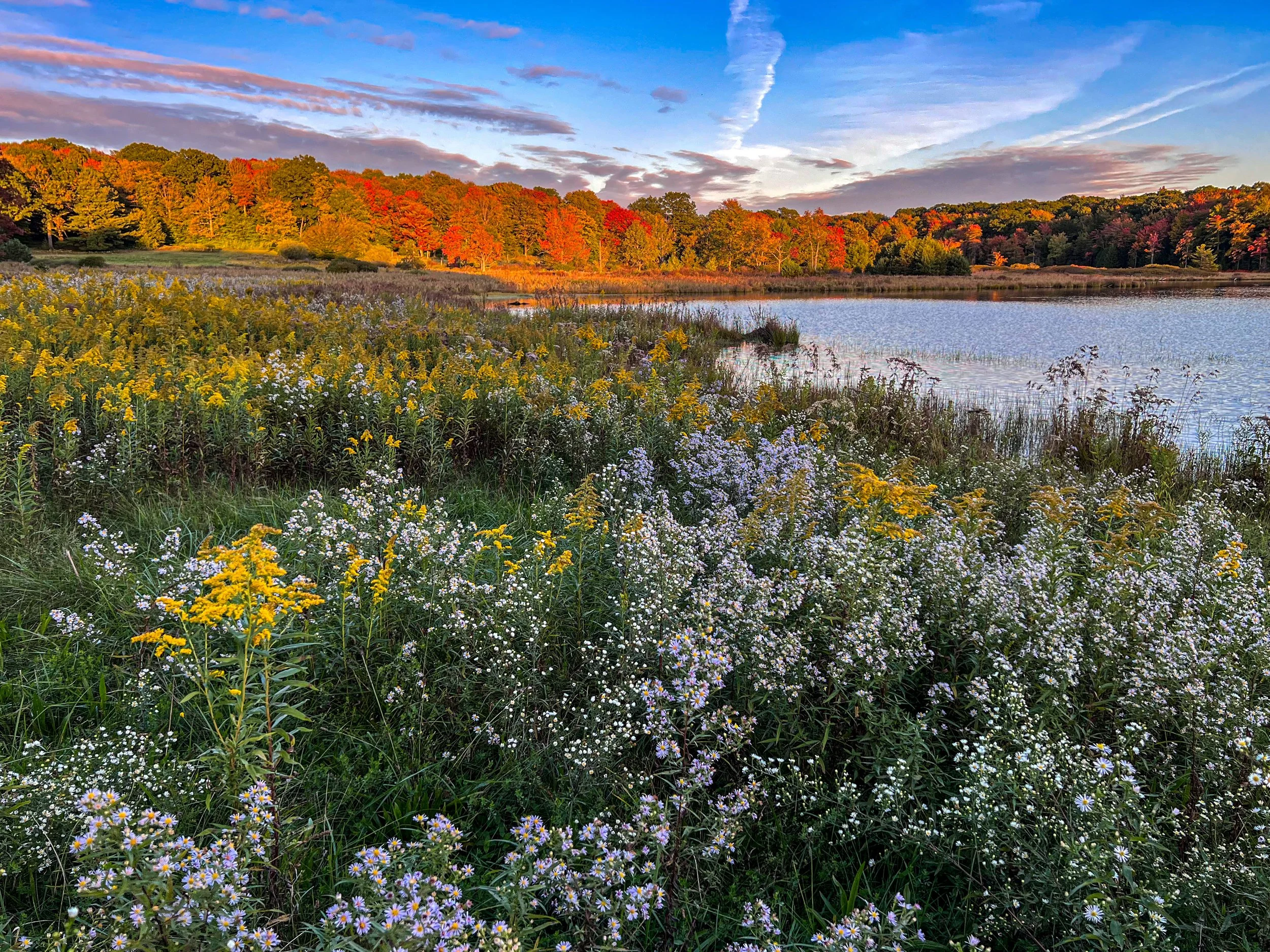
A beautiful example of forest, meadow and wetland edges.
In ecology we learn that “edge ecologies” are more dynamic and diverse than pure ecologies. We find nature existing with more diverse and dynamic partnerships in these edge spaces. For instance, the edge of a forest and a prairie will have species of both ecosystems interacting. And the edge will have some of it’s own species, plants and animals that only live where the two ecosystems merge. In session seven of our program we explore the permaculture principles: Expand the Edge and Value the Marginal. The conversation almost always goes from ecological systems of health and diversity at the edges to the human realities of marginalized people groups and ideologies being valued and lifted up.
I love edge ecologies, that’s where we find blackberries and raspberries, hazelnuts and wildflowers. That’s where the monarch butterflies find milkweed to eat and lay their eggs on. I also love hiking up mountains to the edge of the tree line, where trees grow small but survive for centuries feeding Clarks nutcrackers boreal chickadees.
It’s not a big leap to go from learning about the diversity and abundant potential of edge ecologies in our gardens and farms to the ethical imperative of diversity and value of the marginalized in our faith traditions. Throughout the prophetic books of the Bible the voice of God is proclaimed from the margins of the Israelite culture. It is not from the center that change ever comes, but from the prophetic margins, where courageous men and women proclaim new messages of hope and truth. The prophets spoke out against idolatry and injustice against the poor over and over again, calling for change and repentance.
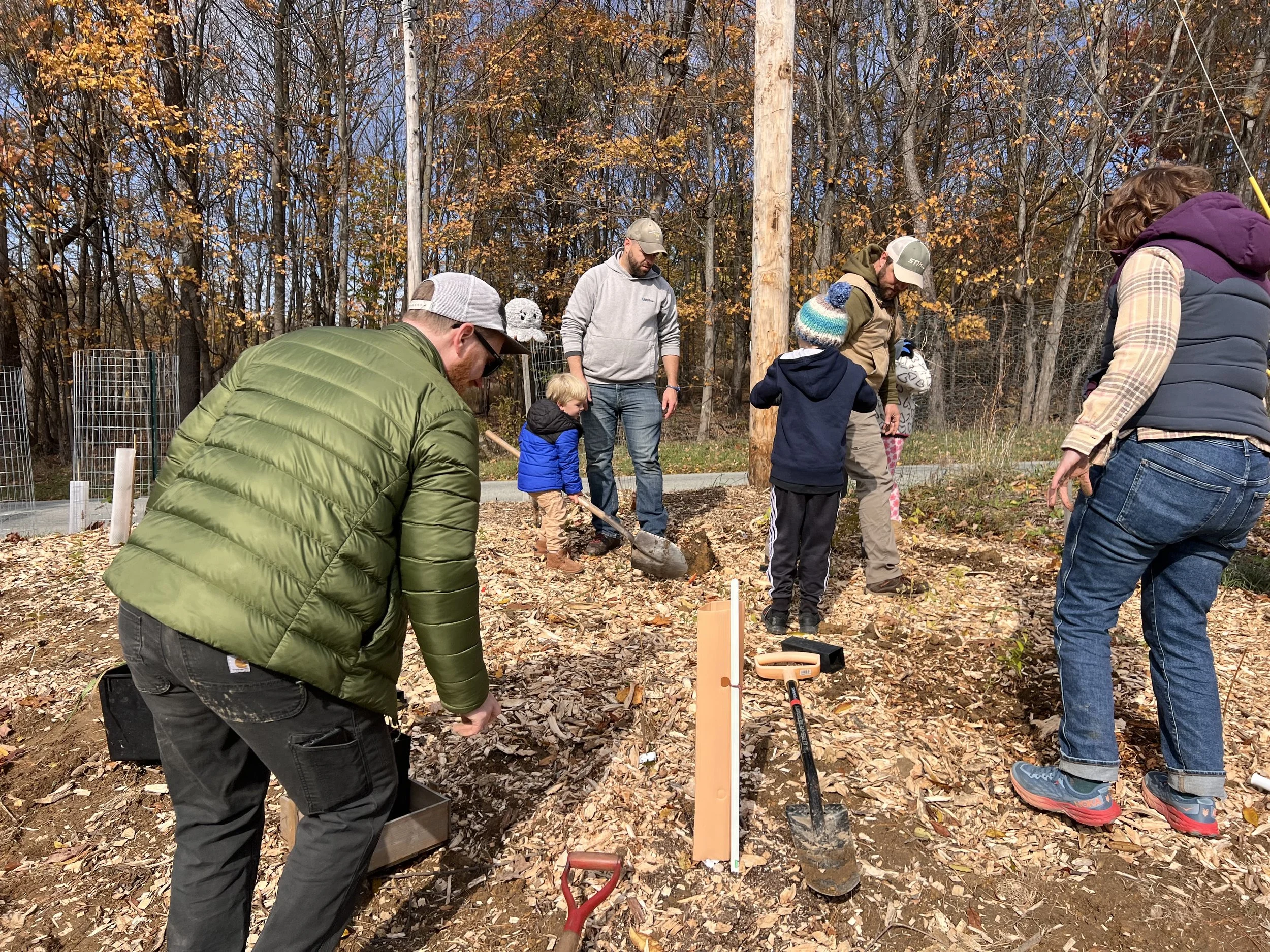
WIG volunteers planting a hedgerow, a perfect example of an edge ecology between the road and a farm field, or often between two fields.
Through Wild Indigo Guild we are hoping to develop leaders who can grow food by expanding the edges and valuing the marginal through faithful land stewardship. We’re also hoping to develop leaders who have the courage to speak prophetic truth from the margins of our faith, calling for a refocusing of the message we proclaim, a message that always lifts up the oppressed and welcomes the stranger on the margin. Not only will leaders proclaim a prophetic message, we’ll also get out of the way when those on the margins are ready to lead. We hope to amplify the voices on the margins who are calling for “earth-care, people-care and equity for all God’s creation.”
Module seven is all about participation in God’s work at the margins to bring about faithful work of restoration and healing. At the margins, whatever that looks like for you, you’ll always find ways to connect and partner with a diversity of people who have a diversity of thoughts and opinions, but who all work together for the restoration of God’s diverse communities.