Native Plants Restored!

Native blueberries are a great addition to many church gardens.
This spring, and now summer, has been a time of planting for Wild Indigo Guild! A few months ago Eastminster Presbyterian Church contacted us asking if we would create a full landscape redesign for their urban property. This church is just down the hill from where I live, a block from where I went to seminary, you can see Garfield Community Farm’s water tower just up the hill when you’re standing on their property. The staff didn’t want to have us lead the educational and spiritual formation aspects of our program, just design and implement a plan to transform the grounds from a sparse and boring yard to a thriving landscape of native plants.

The Eastminster Church Design
This is huge! It feels like the tide is turning in some churches. People and leadership are realizing their congregations get excited knowing their land is growing food, supporting wildlife and creating beauty for the neighborhood!
So far Wild Indigo Guild has planted 250 native perennial plants in both full sun and shady areas of the property. We’ve planted, I think, 25 small trees and shrubs, native and berry producing. Some of the plants we’re putting in are: Red Chokecherry, serviceberry, fragrant sumac, blueberry, red currant, rose milkweed, aromatic aster, bergamot, slender mountain mint, blazing star, purple coneflower, orange coneflower and much more.

Fragrant Sumac, a native shrub, ready to be planted.
The large front yard of the church wasn’t really used for anything, except for their annual live nativity. We’re saving plenty of space for that. But now, the surrounding area will an inviting garden with trails and seating. Moths, butterflies, pollinators, hummingbirds and migrating song birds will all have a space to eat, nest and perform their myriad ecological services. The garden will also become a space of abundant berry production from the dozens of edible berry producing shrubs. I can already taste the sweet serviceberries and tart currants!
We continue to need your help to do this work! Please consider a donation!
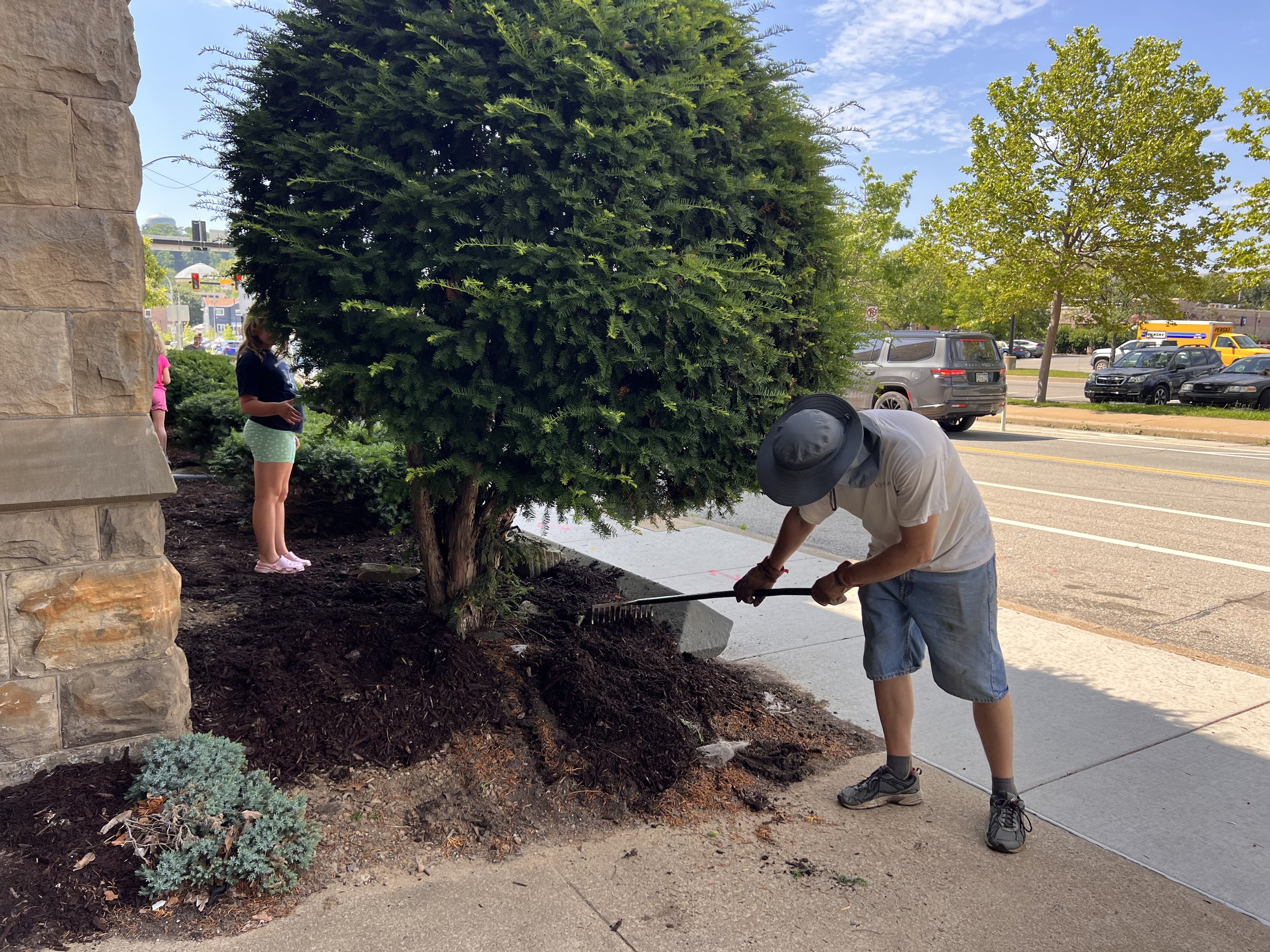
WIG volunteer and board member, Jake K., mulching under and existing shrub.
Tree 103
The first time I hiked into the Elder Grove at Paul Smith’s College in the Adirondack Park there was about three feet of snow on the ground. Being led by my friend Rich Hanlon, a pastor and Adirondack nature guide, the trek took only about a half hour, maybe less. We were off trail with just a GPS pinpoint to find our way. Tree 103, the tallest known tree in all of New York, and probably the second tallest east of the Mississippi, had fallen a few years before. Crashing to the ground, it must have shook the earth. I wonder if the college students just down the road had any idea the giant had come down.
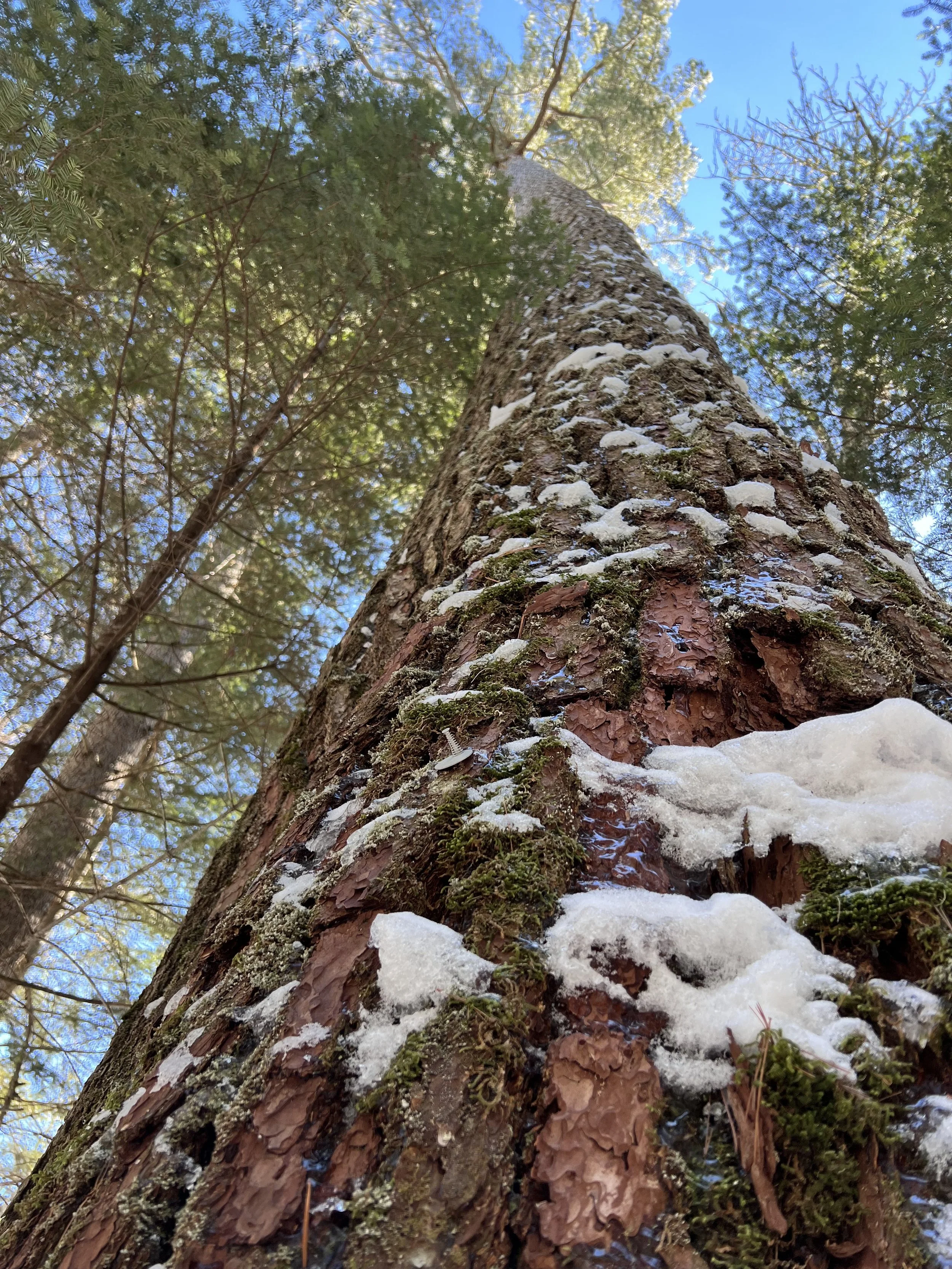
One of the still-standing elders in the Elder Grove.
The second time I visited the Elder Grove was last Tuesday with Rich again and my son Micah. He’s hoping to go to Paul Smith’s and major in Parks and Conservation. This time, as we navigated off trail, there was only a little patchy snow still on the ground. Before we even got into the woods I saw something big swoop out of a tree and quickly glide out of site, the winged creature indicated to me that this would be a good day in the woods. Rich didn’t see it, I’m sure he would have known what it was right away. I thought owl at first, but that would be a bit strange in broad daylight. The three of us began walking on an old service road and there it was again, just 100 feet from where I first spotted it. This time we could tell it was a broad winged hawk, a migratory hawk that has just arrived back in the Adirondacks after staying in its winter home down south.

Lichen and moss on the root flare of a 400 year old white pine in the Elder Grove.
These woods are also where Rich first taught me how to call in a whole swarm of chickadees by imitating the noises they make when a predator is in site. The little birds swooped down like the big hawk, but not away from us, they came toward us. Little black-capped bandits ready to fight off any invader. Chickadees are one of my favorite birds, don’t let their cuteness fool you, they’re the bravest little birds out there.
Finding your way toward the Elder Grove is a bit of a strange experience. The forest doesn’t feel old as you make your way toward the pin on your GPS map. Its not until you’re nearly in the grove that you feel transported to a different time and place. Suddenly the forest floor feels thick with moss and fungal duff. The trees aren’t as big as redwoods, but they reach so high into the sky, towering over the red spruce and Frasier fur in the understory. Each old growth white pine is about the same age, just over 400 years old. They’re all reaching their maximum age limit, like a human hitting 99 or 100, these trees have lived long and healthy lives, but can’t live on forever. Most will fall in wind storms like 103. Several of the tallest trees have come down over the past five years. But not all of them.
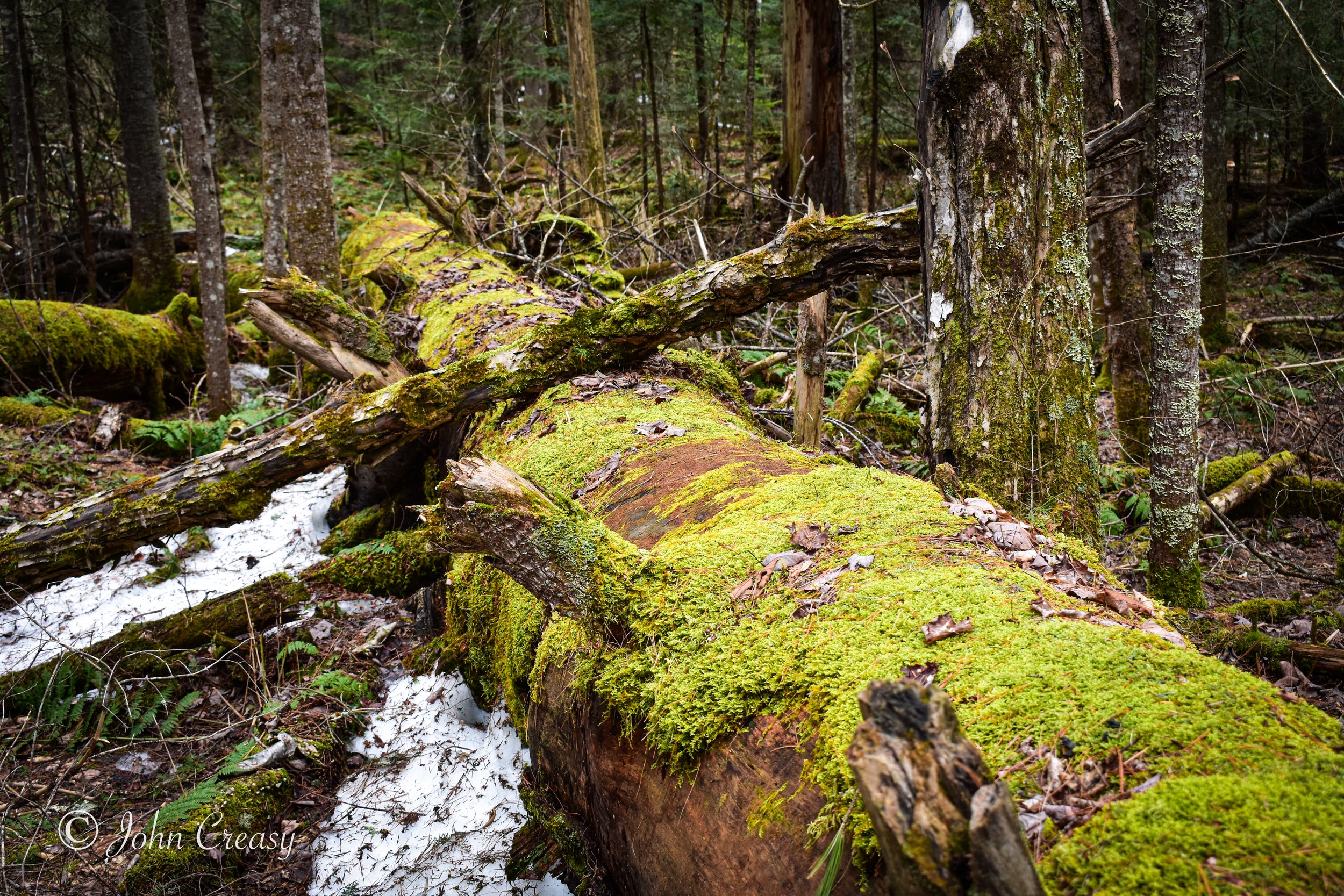
Tree 103 in its final resting place, nourishing life as it is consumed into the forest floor.
We sat with the fallen giant and the other standing giants for what felt like a fairly short time. At first we talked, wandered and mused at the beauty of the moss and lichen. We climbed up in 103s ten foot tall stump and felt like tree gnomes. But then we scattered, without saying anything to each other, we just found a quiet sit spot and sat. Micah disappeared into the green depths of the woods. I didn’t know where he went, but knew he was experienced with spending time with me and trees. He’d find a spot to rest, pray, meditate or just let his mind wander like the high branches of the trees blowing in the wind. Sure enough I found him laying on the ground under a towering giant. Time seemed to stand still as we all experienced the perfection of this magical place.

Micah under one of the Elders.
After a while we hiked back out of the woods. We got to our car and realized more than three hours had passed. We’d spend far longer in the Elder Grove than any of us thought. Time well-spent with my son and our good friend and the ancient Elders of the forest.
I just learned today that Native peoples of the Adirondacks considered white pines to be their ancestors, their elders. No wonder this place is called the Elder Grove. It can be hard to go back to regular life, normal day to day stuff, knowing places like this exist, knowing living beings like the chickadees, broad winged hawk and ancient white pines are all ready to give us transcendent moments. But these moments can frame our lives, time with our loved ones, time with friends who “get it” and time with creation and creator. I only wish more places like this existed and were protected so more people, all people, could experience the wonder of the natural world.
Next fall Rich, myself and Megan Shelly will be leading a four day contemplative backpacking trip here in the Adirondacks. Anyone with good hiking ability is welcome to join us. We’ll learn the ecological ins and outs of these amazing mountains and valleys from Rich and we’ll all learn to connect more deeply with ourselves and the natural world. More details on the trip will be coming soon!
Care and Repair:
A Lenten Faith and Practice for 2025
By Evan Clendenin

“The Wonderful Wizard of Oz” book cover.
Over the years I’ve gotten more into the habit of tool care. Every year as gardening season approaches, I take a courageous look at my garden and workshop tools, and the ways I’ve failed to care for them.
I’ve even made tool care a ritual, reviving in my life a ritual of PA Dutch country for fat Tuesday. Along with enjoying a grease-fried doughnut and hot cup of coffee that day before the beginning of Lent, I go through the soul-effort of collecting up my tools, assessing condition, cleaning, repairing, sharpening blades, greasing wood handles.
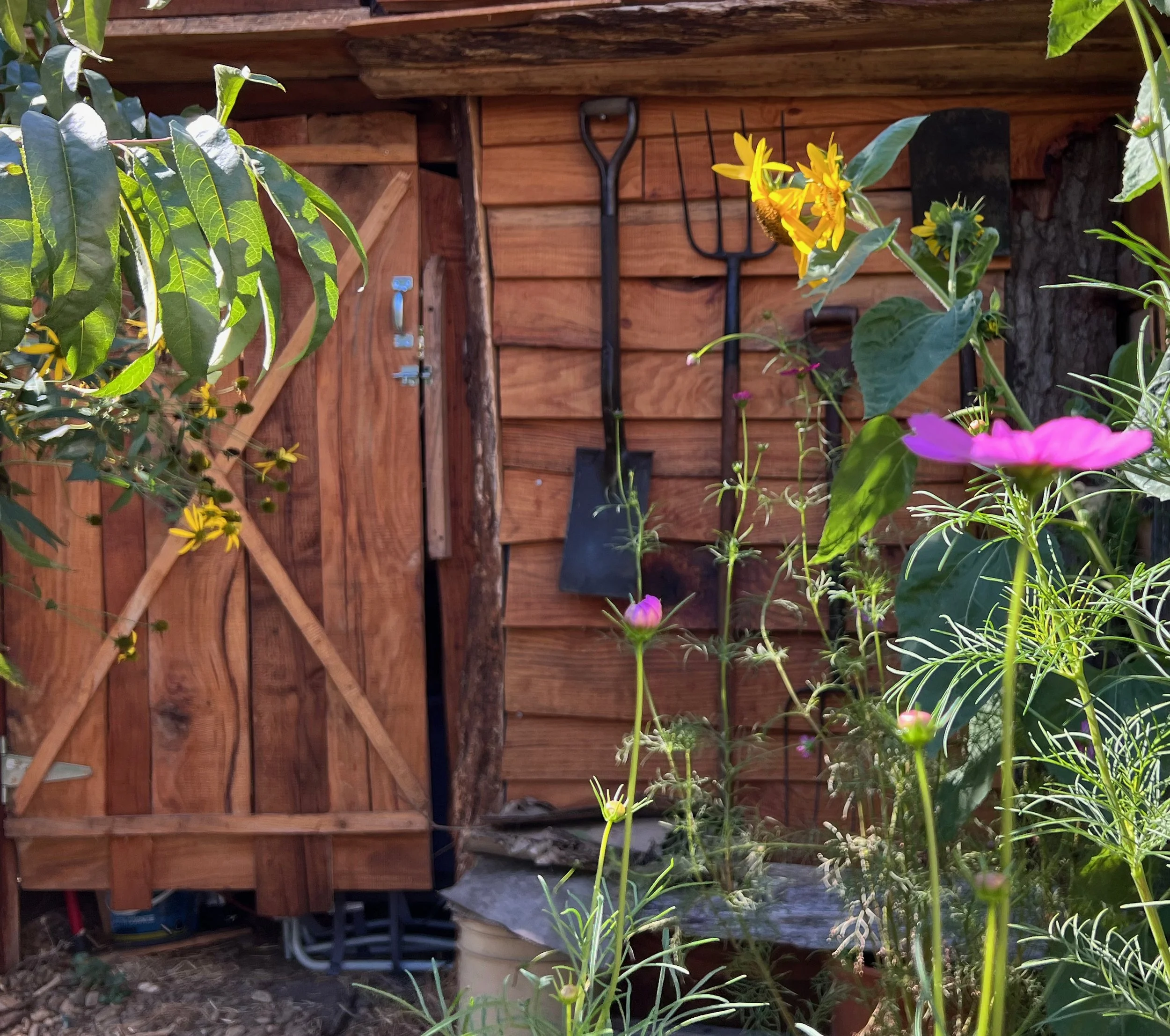
It’s a soul effort, because the tools may testify against me of my little hurries, half-done tasks, inattentions, and plain lack of care. They may occasion a delightful memory of pruning fruit trees, or a conversation with a family member or co-worker as we pressed on at a repetitive task on the farm. It’s a soul effort, a turning around, teshuvah, to attend to the care of tools. It becomes a moment of gratitude and trust. And the tools last longer.
At Garfield Community Farm, the staff have begun an effort to better organize and care for their tools. In the various places we work, attention to care, repair and maintenance are part of the good we undertake. Sometimes we let these tasks slide.
They don’t always beckon with urgency. There is much unhurried, according to schedule and agreed custom, a little bit boring. In such tasks we may face the prospect of silence with heart, mind and body, while our hands work at something knotty, that can’t always be sorted or solved quickly. But sharp tools, properly greased fittings, smooth handles, and other well-cared for things mean that work can be done with less effort, more safety and less harm for the workers, and the satisfactory sense of skill exercised and gained.
The time devoted to such tasks can be the little stillpoints in a day, and a year, a little lull, or a light and easy task. The stillpoints puncture the grand designs and unreasonable expectations of our schedules with the offer to ‘be here now.’
By doing so we can live in ways that counter and transform our wasteful culture. We resolve personally to take good care of material things. We re-orient and persist in concerted social efforts to care, repair, maintenance our homes, industries, tools, institutions, agreements, convenants, truths, agricultural and wild lands, and the other forms of life we depend upon.
Gardeners, smallholders, workers of all kinds undertake daily effort to prepare their tools and themselves for good work. Farmers who tend big acreages invest weeks and months in the repair and maintenance of equipment and various infrastructure to prepare for planting and harvest. And they depend upon workers, traditions, schedules, and also contractually-promised funding from banks and the Federal government in order to do so. And we depend upon them receiving these things.
Care and repair. Let nothing-personal demand, urgency, threat, fear-obstruct you from such important deeds. Small steps of care and repair confer a deeper capacity of soul and strength to meet the reality with truthfulness and compassion. In tool care, we practice a caring regard for reality.
A caring regard for reality translates into an unswerving willingness to turn again and behold the moral and spiritual worth of God and your neighbor. We fail, but we keep in the way of this moral purpose and vision. It means caring regard for human beings, and for the forms of life that make our lives and enterprises and associations possible. It means caring regard before the reality of the infinite creatures of land and earth, of sun, moon, stars, of birds, insects, death, and life. And it even means regard for tools and other things formed of earthly matter, forms generated by human hands, hearts, wisdom, forms generated within the Word and Wisdom of God.
It means receiving into our being the caring regard of God for us, and living ever more into and from that truthful and compassionate seeing us good and very good.
The church season of Lent offers us grace through a time on earth during which we may renew our caring and truthful regard for reality. From this can flow a desire for repentance, and healing impulses toward repair. We might find an new flowing of gratitude poured out in our hearts, and live more and more out of it. A season of renewed caring regard for reality renews our acquaintance with the ground of our being, gets us ground-ed.
Being so ground-ed, we gain humility, a knowledge and willingness to live with the limits, gifts and true shape of who we are and what we are part of. The grace of such a season instills caring regard for reality-for God, the gift of everyday life, for those near us along with ourselves.
And we practice such a season of grace and repentance by everyday deeds of care, maintenance and repair. Getting out for a daily walk. Cleaning that closet where you shove problems. Scheduling a medical appointment, (if you can afford it!) Calling someone with whom you have experienced hurt, and listening well, speaking truthfully with love.
Or, caring for your garden tools.
By such attention and efforts of care, repair, maintenance, building, tending,-we contend against the vice and sin manifest in an opposing attitude, contempt for reality.
Right now, you may feel anxiety, fear, isolation, betrayal, and anger at seeing contempt of the rich and powerful who has grasped the executive branch of the US government in ways far exceeding what is just and right or consitutionally agreed. They demonstrate contempt for reality-for laws, institutions, public good, global ethics, land and water, agreements, and everyday people. They are deeply wounded persons, serial abusers of various sorts, in bondage to sin of contempt for reality. They violate americans and the world, grasping at our common heritage and our public goods.
(And we ourselves, of various political stripes, in our recent cultural celebration of such unthinking tropes as ‘move fast and break things,’ and status as ‘disruptors’ have some self-examination to do too.)
They attack government programs, workers and capacity, a vision of trust and responsibility, and indeed the values of care and repair that guide these, however imperfectly. Public health, education, science, ecological conservation, veteran’s benefits, weather monitoring, travel safety, massive and careful re-investment in housing, energy, inudstrial capacity, social safety net programs you working people paid into, like medicare, medicaid and social security. There are many stories you could tell of the people all over harmed by these actions.
What have you heard? What have you seen?
Among these, we hear from midwest farmers trying to repair and maintain the tools they use to grow the food we and the world eat. Large investments in the public good, land conservation, addressing climate change, and improving the farmer’s own prospects had been carefully negotiated in the Inflation Reduction Act. Those funds were promised and contractually obligated to help farmers build new water and irrigation systems, invest in no-till and cover-crop farming systems and equipment, and more. They have been denied the money due them for work of care, repair, maintenance, investment.
How many everday people have been impacted just recently by this violation and attempt to confuse, divide and ‘put them [us!] in trauma’?
We could recount a long history of contempt by some of the rich and powerful for the vision and promise hidden within our nation- that of realizing human dignity, freedom and equality in an unfinished democratic project that desires to aid the life of all dwelling here.
In the past 50 years, we met contempt for the reality of people, earth, institutions, public good, and the prospect of a humane life in the concerted effort of business to pursue de-industrialization. What we experience now might be understood as the outcome of 50 years of such contempt. They pursued a profit strategy of convincing people that government is the problem, evading taxation, environmental regulations and clean-up costs, breaking unions, exporting jobs, disrupting a diversity of communities, and very notably, choosing to not invest in the repair, maintenance and re-newal of industrial capacities.
That is to say, by not taking care of tools!
This winter, this spring…this season of Lent… and the Easter season of Re-newed Life…
We call you to to turn from contempt and toward caring regard for reality.
We call you to turn with courage to the contempt you carry. Whether you see others or yourself that way, may the caring regard of God gaze upon you with grace, truth and compassion. May it pierce your heart, change you, heal you, care for and repair, renew you.
You can do so in smaller everyday ways by taking up acts of care and repair. You can sharpen, grease and repair tools. You can be better prepared for one task, while pruning away others. You might patch some clothing, rendering it more beautiful in the process. And in your prayer you might wonder what work of repair and beauty like it might God be doing within and around you? You might consider that one person you know with whom you might attempt to repair something broken, frayed, or estranged.
If appropriate, you can ask for forgiveness, offer words of gratitude, make an offering of reparation. Or start by extending truthful and caring regard.
And with others we can make the great soul effort of caring regard for reality. For lands and their creatures, for working people, and the good of work done well, and the tools needed to do it. Regard for the grounds of our being found in many and diverse forms of life upon which we depend, and which require care: habitats, languages, institutions, associations, tools, public resources, close to home care and mutual aid, common goods. Truthful words, and the courage to make life good for others and ourselves.
May you receive courage and persistence,
in the face of contempt, and human destructiveness,
to care, repair, maintain and renew what is
good on this good earth,
and, made in the image of God,
destined to grow into the divine life and likeness,
to live with your whole being
in caring and truthful regard.