Commit to the Renewal of Creation
By Evan Clendenin
What way of life for you would express a commitment to God’s renewal of creation? Maybe in regions of the country that are naturally forested, it would involve planting trees?
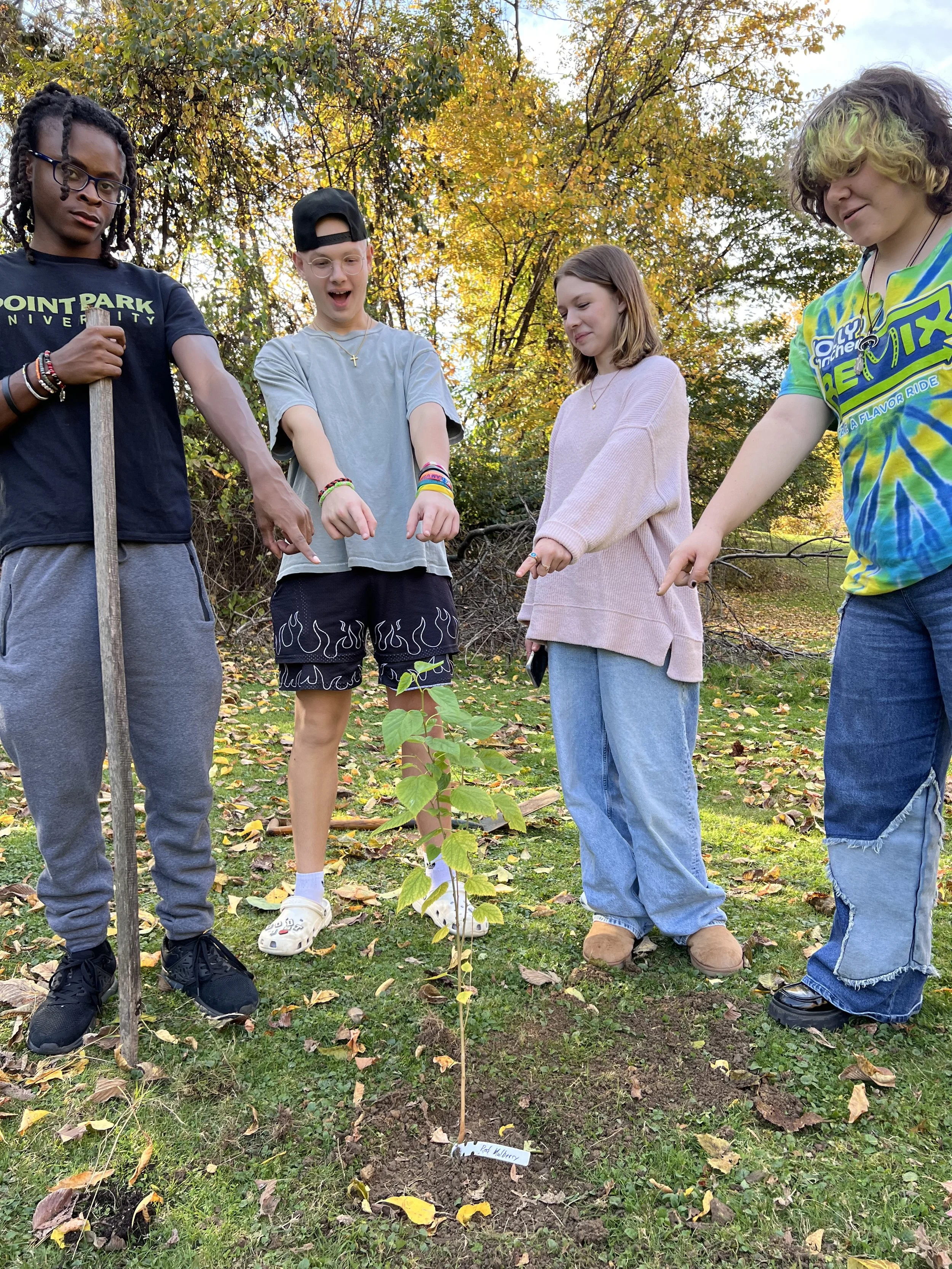
Beulah Church Teens plant a native Red Mulberry.
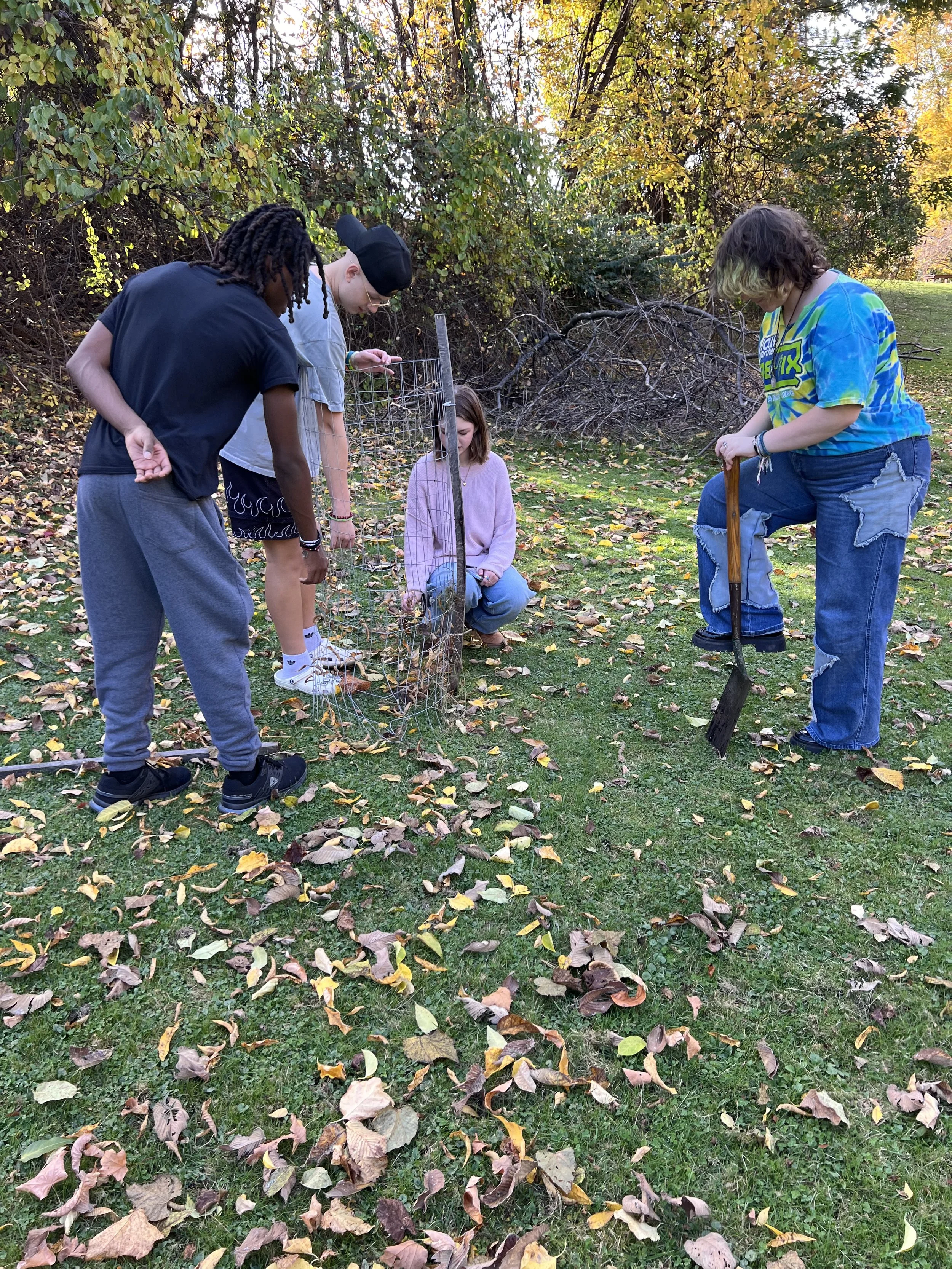
These four young folks worked with John recently to plant a tree on the grounds of Beulah Presbyterian Church, just east of Pittsburgh. Several years ago the church planted hundreds of trees around the property. Having learned some lessons, they are regrouping to commit to ways to more manageably plant and tend to their care in the long haul that unfolds day by day.
So John and the crew walked around to look at the various trees, undertake some tree care, and even plant a new tree. I can well imagine this was a good lesson in how to plant a tree well. And we can hope that the experience will root in their hearts, and grow as a desire to stay with this and all the trees they plant, to see and assist the life God is bringing about in that place thru the trees and more.
A life lived out of commitment to the renewal of creation. Planting a tree. Not just one, but many, over and over. And not just you, but teaching others, showing them by example, by your love, enthusiasm, care and wisdom for this task of tending the life, breath and soil of the ground we inhabit. And not just teaching, but learning, and making room for others to watch, listen, learn, contribute, receive, pray, enjoy, as well as work. Planting, and staying with it, tending the tree, the land, the life growing up. To return to the tree, and to gaze upon its beauty your whole life long. To take care of it through its days and years, however long you are here, and to teach others to go and do likewise.
And in taking such care, to find the tree part of a much larger, diverse, interconnected place on earth. Returning to the tree again and again, you find your whole being also part of the land, part of its renewal. And not just yourself, but generations into the future, generations into the past. The souls and bodies of those before us, human like us with loves, gifts, wrong doing, learnings, good deeds, and hope of ‘on earth as it is in heaven.’
The Wild Indigo Guild sessions for contemplative formation invite us to consider how we commit to a life involved in the renewal of creation. The sessions that start a new guild help us grow in awareness and uncover impulses for how our whole being can pray, work and be in the world, guided by a love of God present and at work in all things. Such an awareness can reshape and guide a way of life day by day.
A renewed way of life can emerge out of a commitment to the renewal of creation. It becomes a calling to each one of us to shape the life we have hidden in God according to this abiding and transformative impulse of divine love present and at work for and in us. And we might compare it to those relationships which demand commitment. Think of marriage, taking religious vows, or signing up for national service. These are just a few examples of commitments. They entail a risk, an act of faith in the face of the unknown, and an opening to life lived and work undertaken in love and responsibility to others. We neither enter nor leave such a commitment lightly. These relationships and other commitments will present us with challenges and difficulties. They often mean that our illusions are falling away, and the real work of learning another person, and loving them as they are, has begun to transform you and the other.
And to endure such transformation requires a way of life that grounds, guides and sustains us. It requires becoming part of something much larger than ourselves alone. A way of life that keeps us faithful through time day by and day, and renews in us a present tense awareness, -gratitude, joy, compassion in sorrow,-of God with us here and now.
So you might consider concretely:
What way of life -patterns, habits and practices- would help you remain faithful to grow, learn and love out of a commitment to the renewal of creation?
For example, What would help you plant trees, and return to them, and invite others to be there with you, and to remind you all of the Spirit’s renewal of the face of the earth?
Sister Grove Collective
My partner, Alyssa, and I had the privilege of being part of a song writing retreat for Creation Justice Ministries, a national organization that is helping churches make climate change and ecology central to our faith. The retreat was at Sister Grove Farm an hour north of Dallas, TX. Alyssa and I call each other “partners” because we truly do partner on so much of our lives. For almost thirty years, since we were kids, we’ve partnered together to make music. For the past twenty or so years our band has been called This Side of Eve. On Monday we gathered with another singer-songwriter, a composer, a lyricist, a jazz pianist a classically trained vocalist and a long-time staple of Christian music, Ken Medema. Needless to say, the pure talent and experience in the room when we gathered was overwhelming. I felt under-qualified for sure! But I held to the idea that I brought important connections to the song writing by my work in agriculture, permaculture and sustainability.
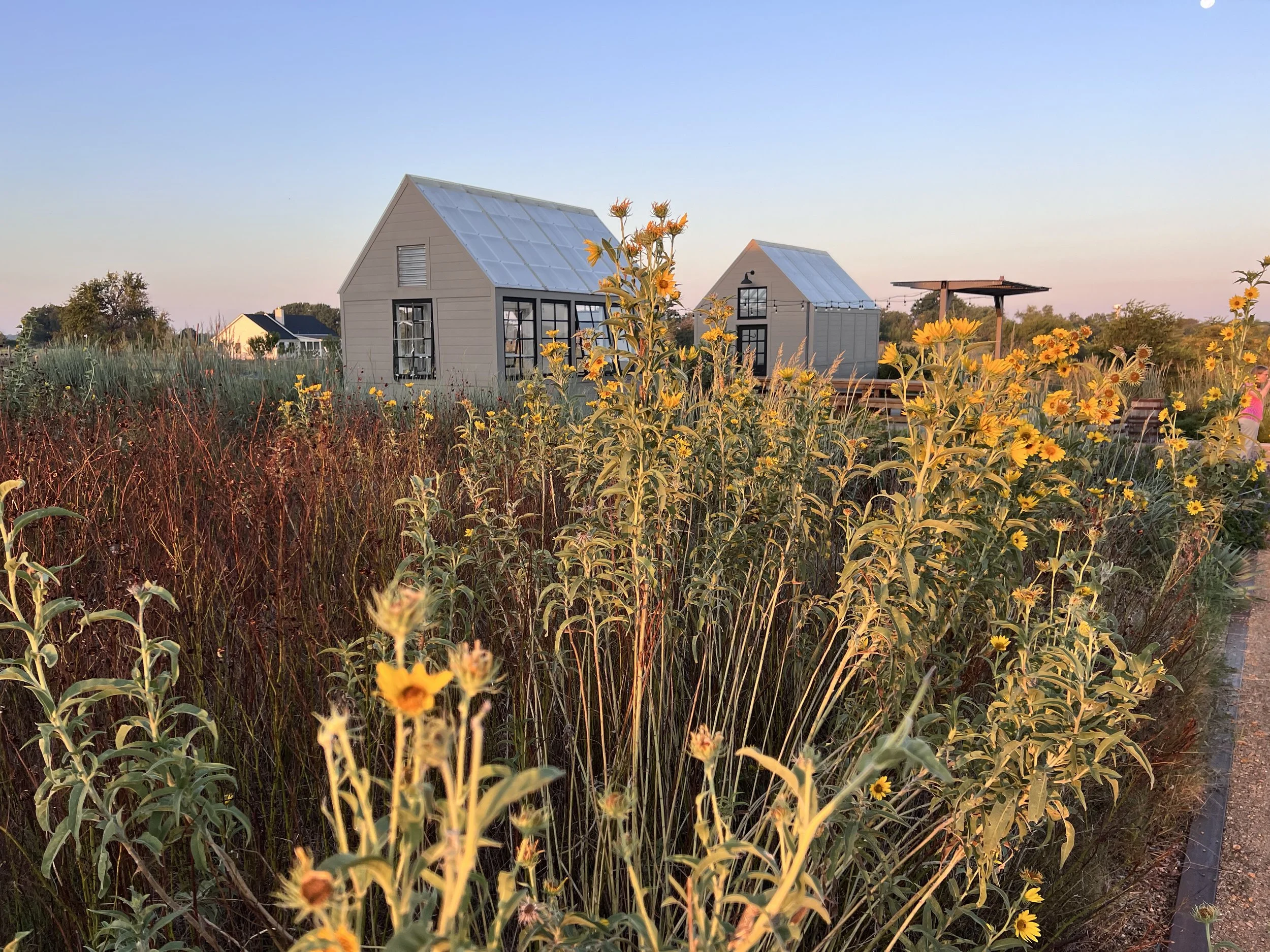
The beauty of Sister Grove Farm abounds.
Our task…. we would write new songs that help churches centralize earth-care, climate justice and ecology. These new songs would be used by Creation Justice Ministries in their work, especially in April when they release new tools for congregations for Earth Day, 2025.
Ken Medema, an amazing pianist, singer, song-writer and an even greater human being led the group with wisdom and a humble heart. We were tasked with writing five new songs for congregations to sing all over the country… songs that would inspire action on climate and action to restore God’s creation. But would the group gel? Would certain personalities get in the way? Would there be conflict? Could we bring such divergent styles of music together in our writing? Would we even be able to write one song together, let alone 5? What if we failed to accomplish anything? For two days we would work nearly twelve hours each day. Would we end the retreat burnt out and frustrated?
Important aside! On day one we also met with Brian McLaren to discuss his new book, Life After Doom. This was perfect, since Wild Indigo Guild is leading a book group on Life After Doom starting this Monday, September 23rd! Email John to get the Zoom log in for the book group. All are welcome.
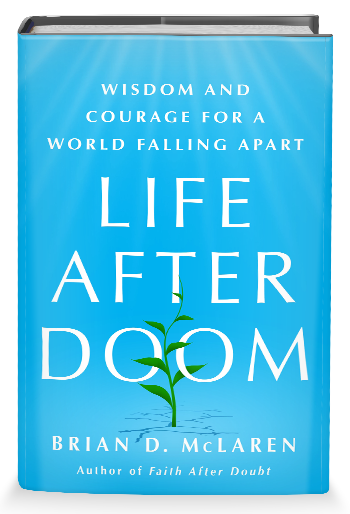
Get your book and Join us on Monday!
I soon realized that Alyssa and I were not looked down on for not being full time musicians, for not living in Nashville or for not having degrees in musical composition. Instead the team of musicians were curious about each other, without judgment. We heard each other’s stories and realized each one of us had something to bring to the group and the creative process that would ensue.
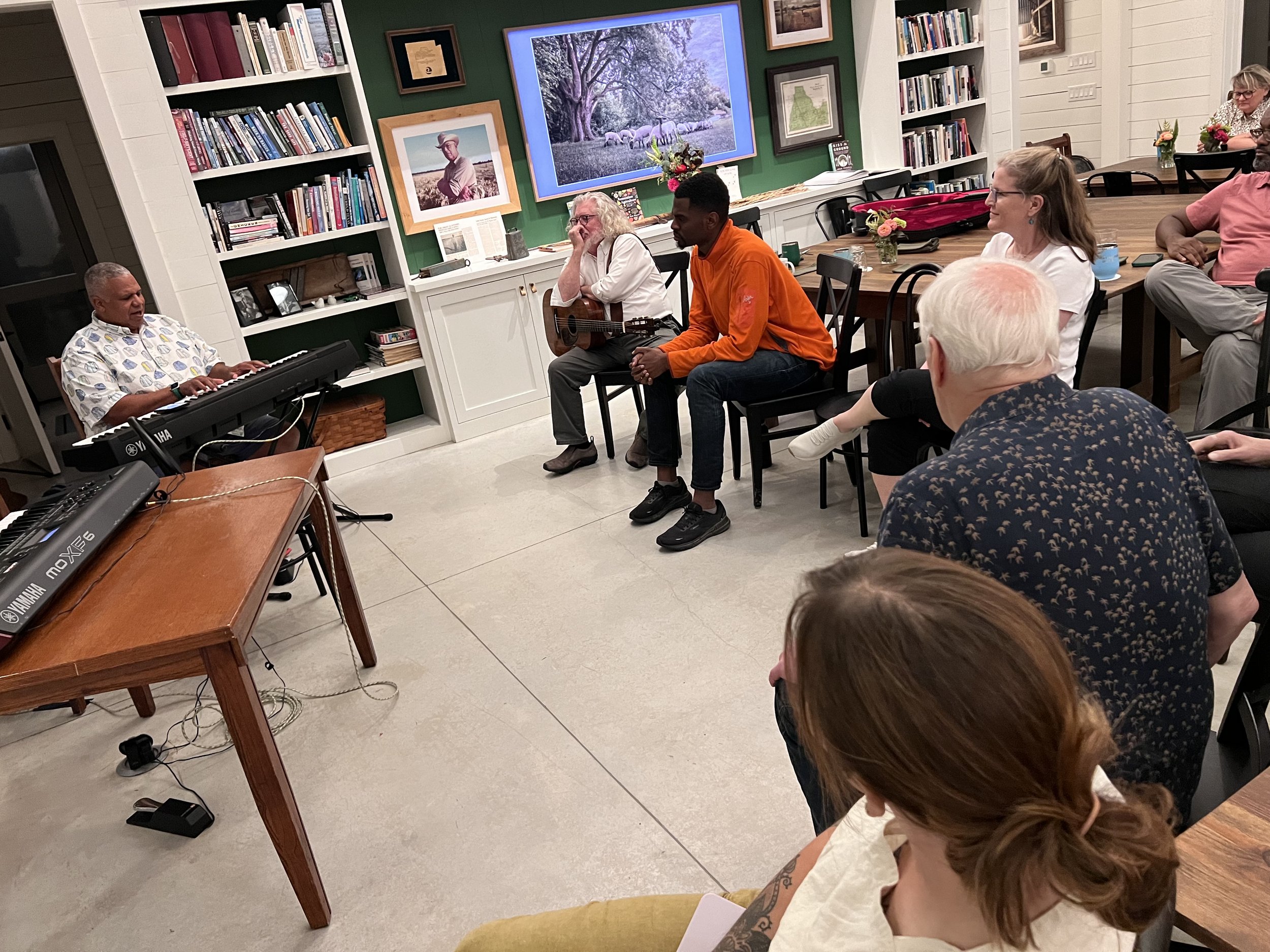
The group working on a song by Mark.
After two and a half days of persistent work we were done. We had bonded together. We had all sung our hearts out. We had put ourselves out there in vulnerability through our music and our stories. We had seven songs! Not five, but seven! From here we’ll work to record all seven songs. They’ll all be scored and charted. By early 2025 they’ll be ready for listening and learning. They’ll be available for churches to use as they see fit, and along with new curriculum and liturgy developed by Creation Justice Ministries.
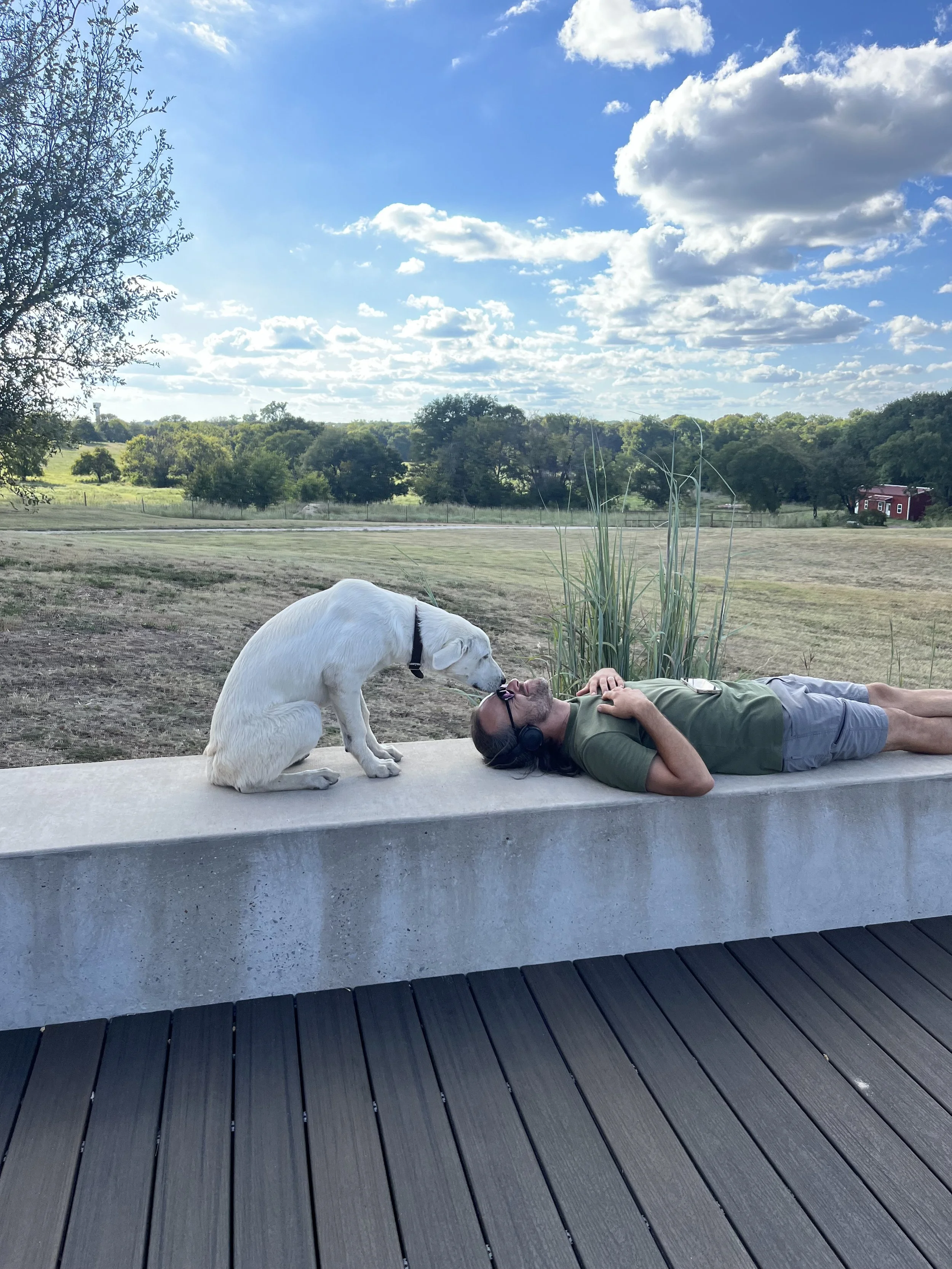
Ranger is a five month old herding dog who Alyssa and I kind of fell in love with. Here's he surprised me while I was resting with a wet nose to the face!
My gratitude is overflowing for the time we had, a very short time, but a very powerful time of creativity, work, bonding, sharing and so much more. Stay posted in the coming months as this music is released and look out for Sister Grove Collective! We’ll even be able to use these songs as resources for Wild Indigo Guilds for use in church and worship services.
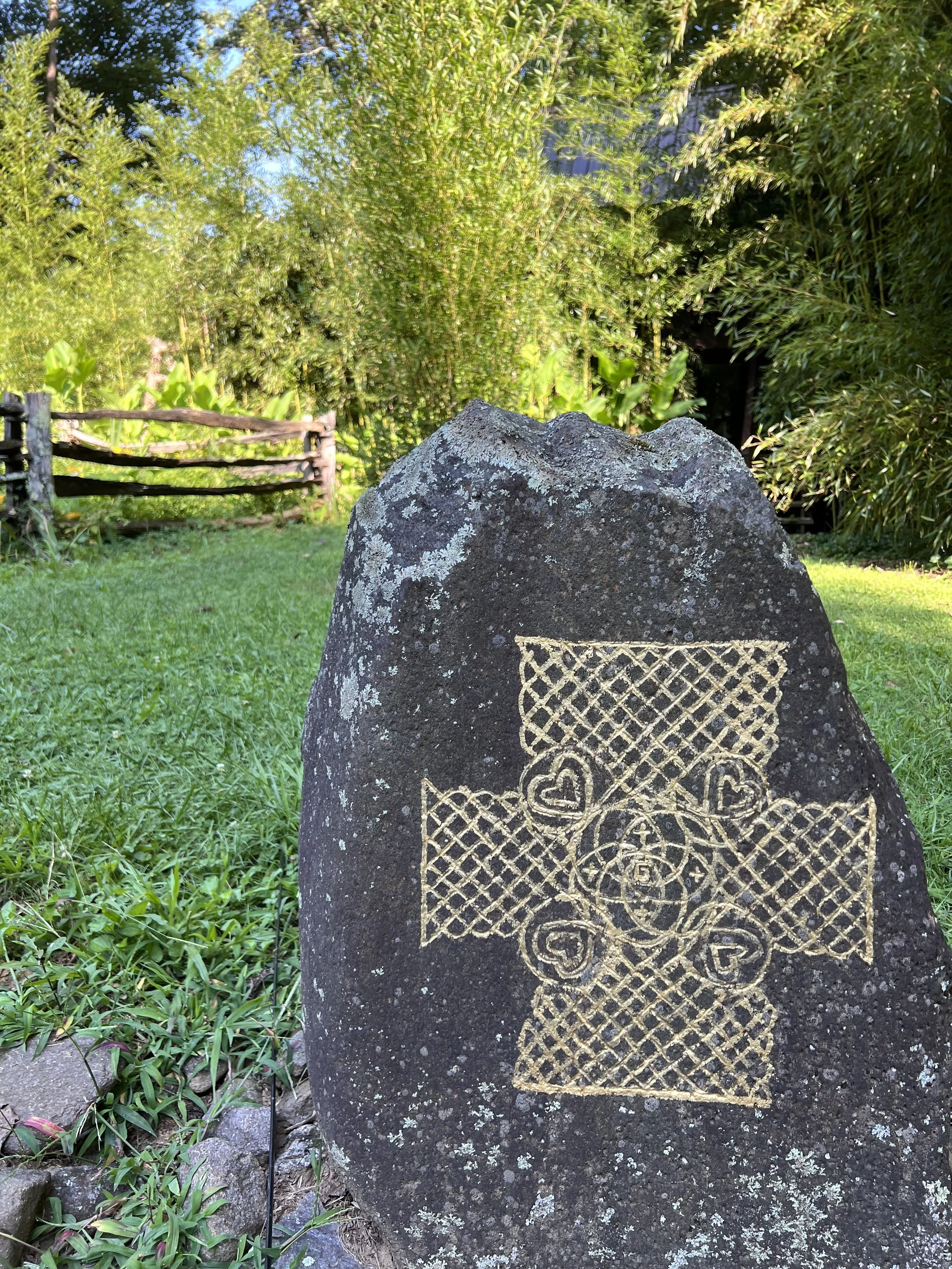
Sit Spot in the Graveyard

Weeping Willow by Evan Clendenin
Along with younger folks at Beulah Presbyterian church we stepped closer toward the underside of life and green growth this summer. We tried to more fully appreciate the place that death and decay, disturbing as these can be, in the created ecologies God brings forth.
John brought materials for making worm-composting bins one Wednesday. The bins house red worms (Eisenia fetida), which eat, and thereby transform, kitchen scraps and other organic materials into rich soil-makings. The worms help recycle and transform waste and waste-making habits. The ‘worm castings’ contribute nutrients, humus compounds, hormones and enzymes, bacteria, and other mysterious stuff that can aid soil and plant life.
These younger folks stepped right in. They did not complain ‘gross!’ They dirtied their hands making bins. A few of them talked with their parents about bringing home a bin for their household composting. Some of them already had worm-bins at home. They were curious and at ease with looking at these processes of decomposition and decay, and assisting the worms, who do much of the decay work in the creaturely economy.
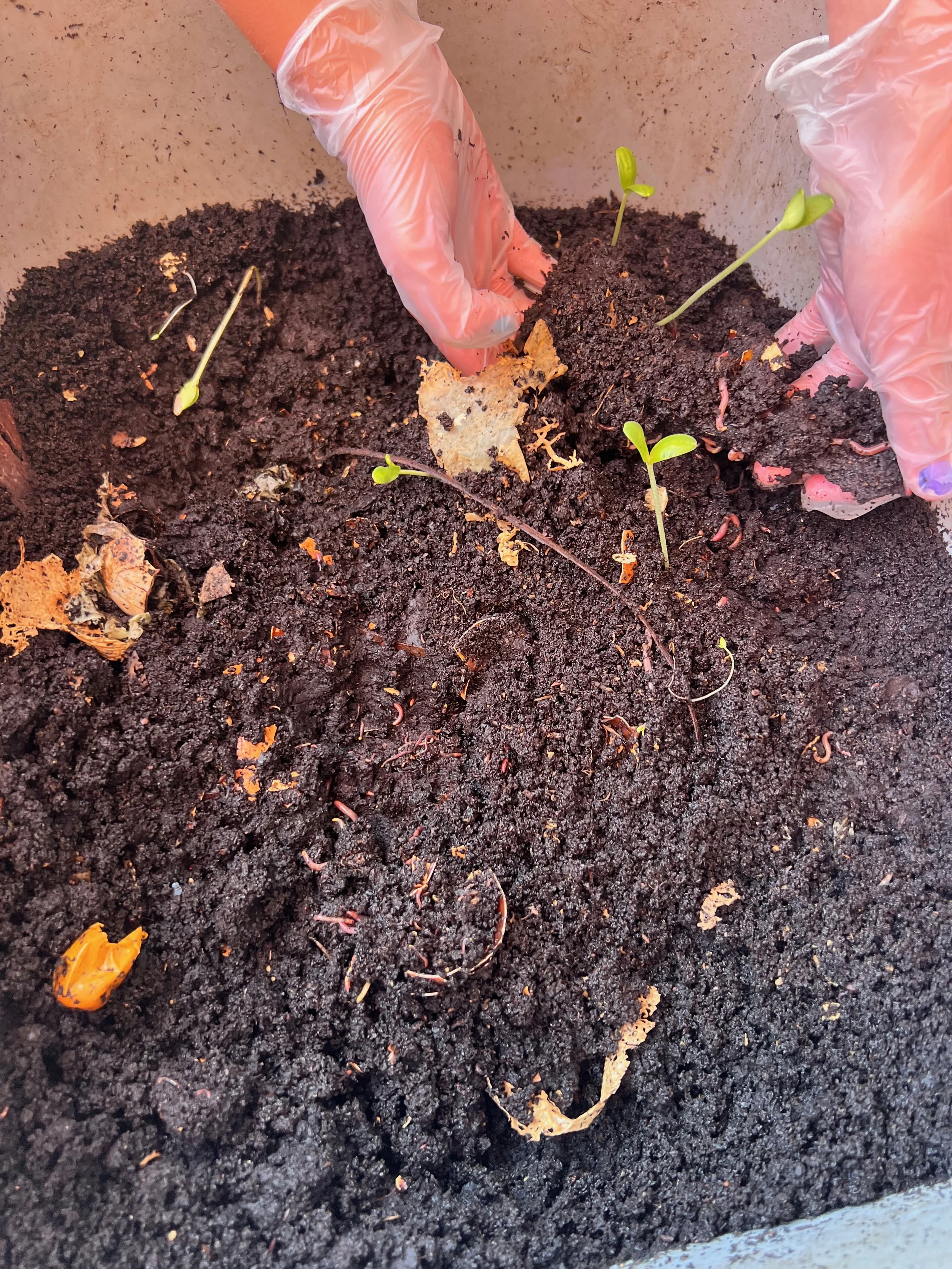
Youth at Beulah moving worms from our bin to their new one.
We also invited them this summer, like we invite all Wild Indigo Guilds, to find a sit spot. The sit spot furnishes a foundational practice for both our 8 week formation series, and stepping into ongoing contemplative engagement with earth-tending and Spirit.
We invite you to find a place relatively near you, where you pause, and dwell with the place, paying attention to God with the place and with you there. A sit spot can be a place you return to over and over. A sit spot finds you.
What in a place calls out to your spirit to stay a while?

What called out to them was the cemetery. They stayed a while in that hallowed patch of the first presbyterian congregation in what we now call western pennsylvania. They said they felt peaceful as they sat, writing, drawing, looking around.
Later, John showed them how to take charcoal rubbings off of the old stones. They spoke with startlingly mature insight, appreciation and clarity about death and decay as part of the created order, wondering about the people’s lives, and the meaning of that place among the church grounds.
These younger folks stepped right into that place. They aid us and others to pay attention to such places on the church grounds and elsewhere where land is tended for the deposition of the bodies of the dead and their remembrance among us.
We might wonder with them at God’s presence and working in this place where the dead rest, and their place in our spiritual practice of life, death and resurrection.
We would follow their example in such a ‘long, loving look at the real’ against forces that keep us from seeing in this way. We’re captive to the ‘american way of death’ (as written about by Jessica Mitford) and the burial grounds it fabricates. Broad expanses of mown, irrigated turfgrass kept greenish by an embalming fluid of insecticide, herbicide and synthetic nitrogren fertilizer incarnate a kind of undead ecology. Concrete boxes keep the thought far away that a children’s rhyme so humorously brings near,
The worms crawl in,
the worms crawl out
The worms play pinochle
on your snout!
That undead landscape wants to keep trees out. Messy apples attract ‘bees’. And leaves fall. What would happen if someone visiting a grave were struck by a falling leaf! They might be suddenly graced with a moment of contemplation… a grave intrusion.
My wife and I like to stop by and walk a little pioneer graveyard near home, settled down beyond view of the expanding olympia suburbs. The old stones, with weathered names, bits of scripture, and chipped symbols, stand amidst massive firs and aged fruit trees. In the autumn we find pink blush crab apples, and tiny sweet pears. American chestnuts grow where squirrels plant nuts from two large specimens planted nearby 150 years ago.
And garry oaks, the native white oak of western washington, still grace this hallowed ground. The Nisqually, Squaxin, Cowlitz and Chehalis peoples of the south salish sea region continue to collect garry oak acorns, and tend camas lilly patches, that once were part of an extensive agro-ecological landscape based on this cascadian oak savannah. And in little patches, even a fading pioneer cemetery, such fragments and refugia hang on.
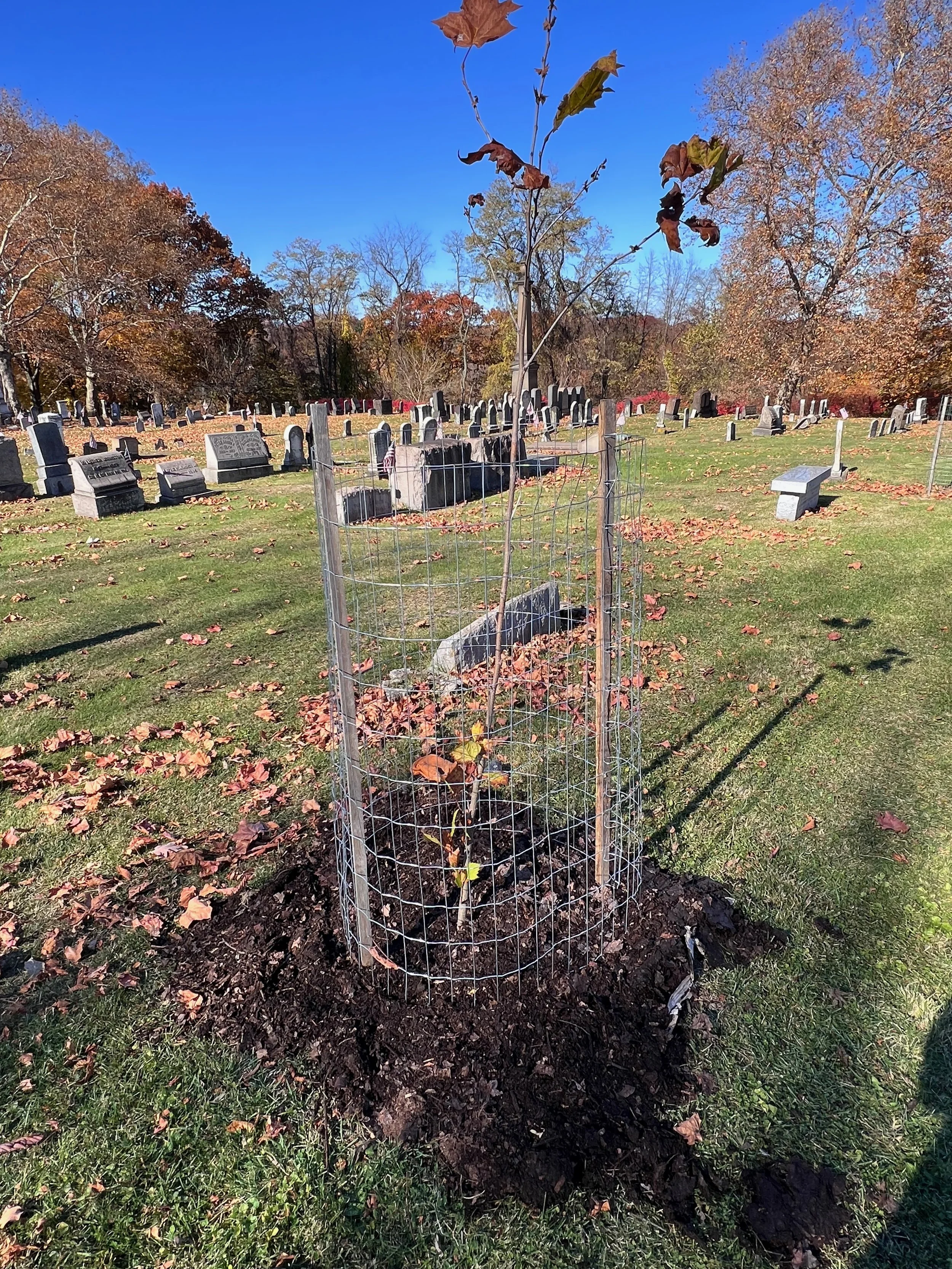
A tree planted in the cemetery of Beulah Church
What do you notice in the cemeteries and other burial grounds near you?
In what ways might you, your community, your church, see and tend these places?
What steps might you take to incarnate a more humane, humble and interconnected earthly habitat in such places and beyond?