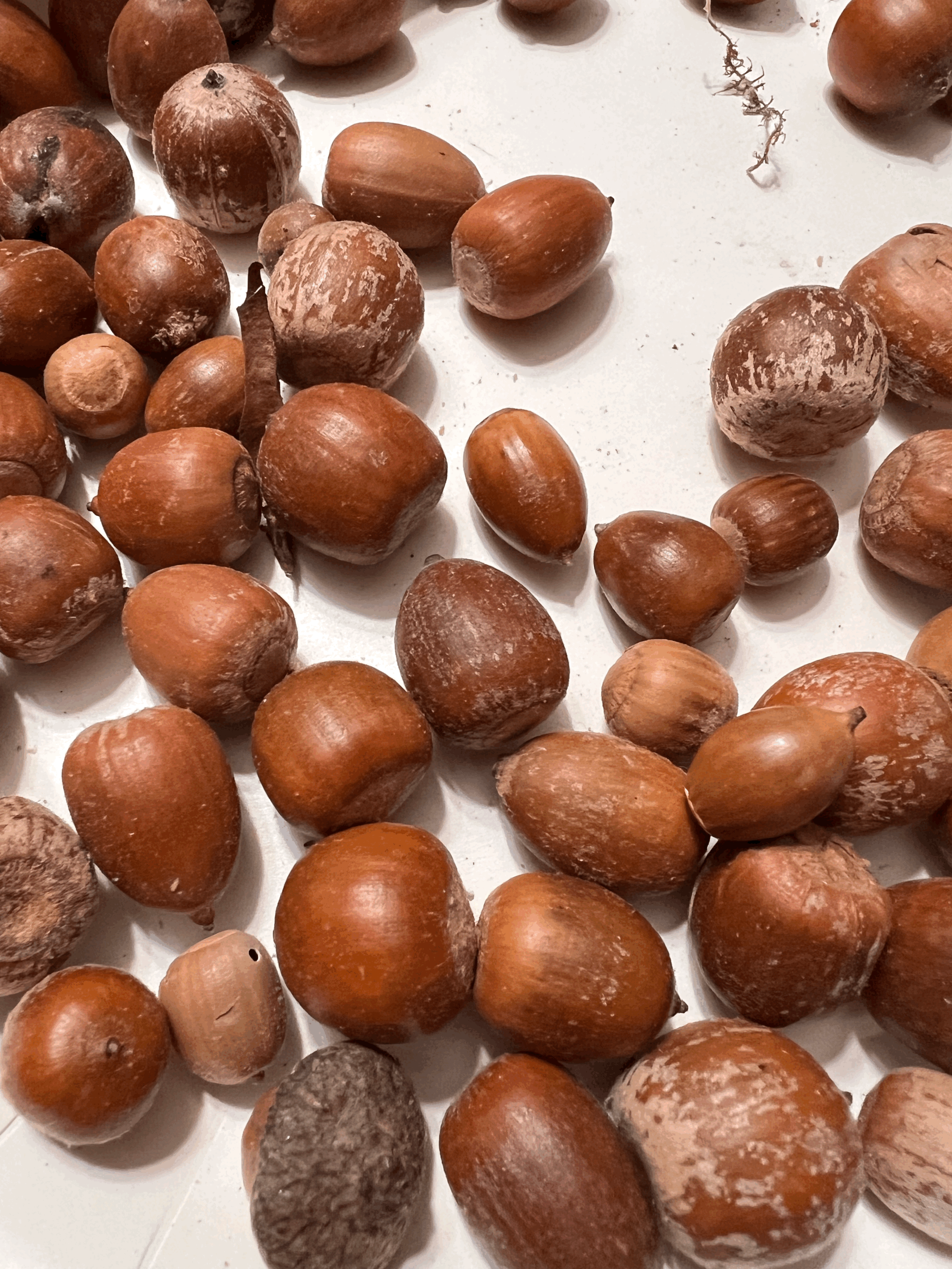
Acorn Abundance!
Last year I (John) was at my last fall retreat with families from The Open Door Church. I’d worked with the church for over 20 years, basically my entire adult life. Most years we would escape regular life for one weekend at a local retreat center. The fall retreat was bitter sweet last year. I had just announced I’d be finishing up my job as one of the pastors in just a few months. Evan and I had already started Wild Indigo Guild and I knew God was pulling, tugging, coaxing me to pursue this new work. I knew Evan had felt the same. I was excited but feeling vulnerable about this next steps God had before Wild Indigo Guild and my life.
I remember collecting acorns on that retreat with a few of the kids. There were some nice white oaks, Quercus alba, outside my cabin, one of my favorite trees in our region. The kids helped me gather more acorns than I needed, plenty. And we all had fun doing it. Kids love foraging. Those acorns, at least some of them, are now tiny trees in pots in my back yard, soon to be planted into larger pots when we start the Wild Indigo Guild nursery in the spring.
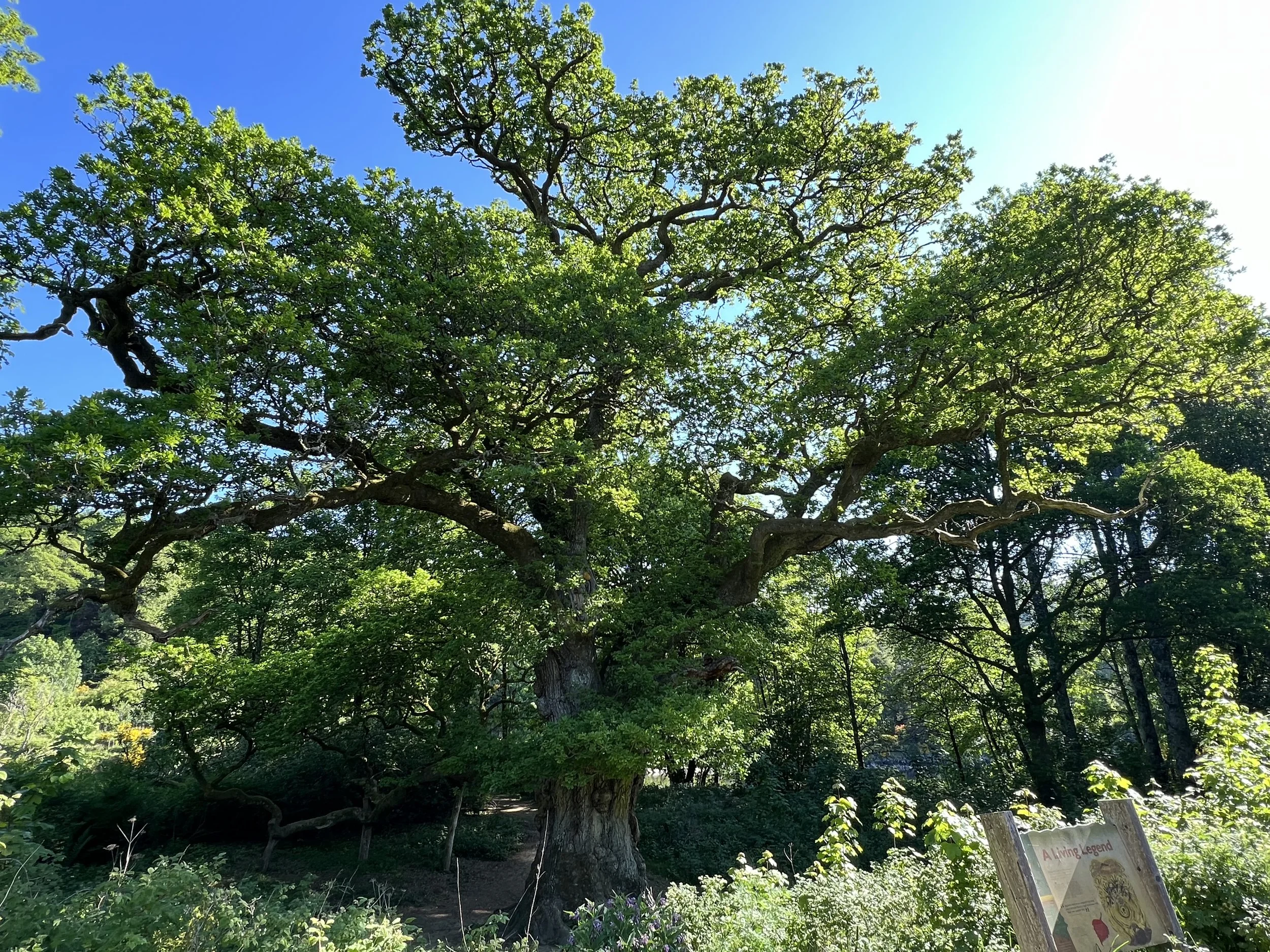
A beautiful and very old Pedunculate oak that Alyssa and I visited last May.
This year the church went on retreat without me, but with their new pastor, my friend, Rev. Jen Freyer-Griggs. When asked what they wanted to do on this retreat some of the kids said gather acorns! And… well… they did. In fact, they made acorn gathering into a full-on thematic event! That meant that I received a wonderful gift of over 10,000 acorns! It should be noted that two or three kids did most of that gathering! I’d love to say we were going to grow them all out and plant 10,000 white and red oaks this year, but we’re not there yet. So, what to do with all those acorns?
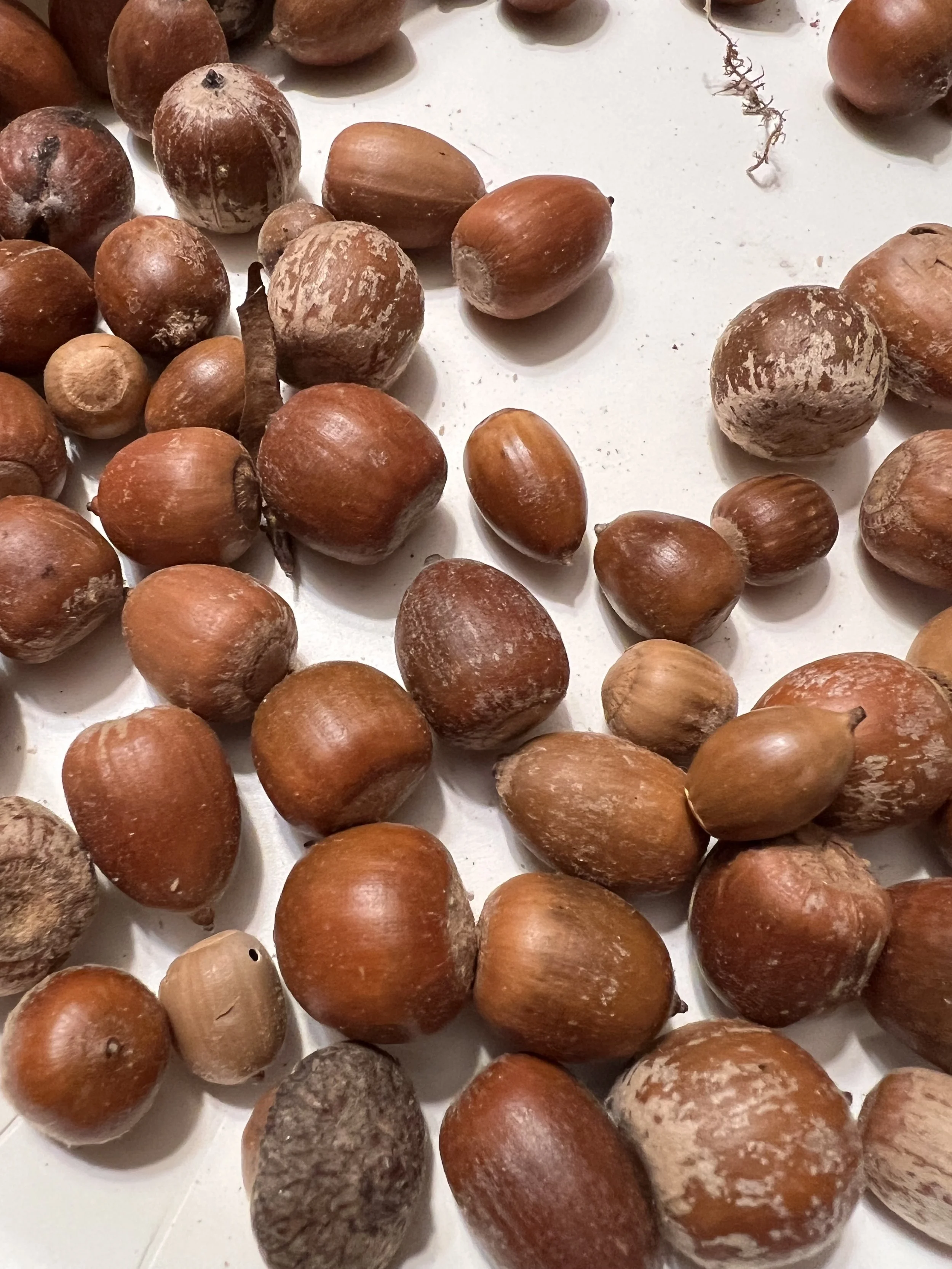
A handful of our 10,000 acorns.
Three easy things you can do with lots of acorns: my favorite… plant some trees, my second favorite, eat them! And the third option, feed them to your goats. If you don’t have goats, pigs like them too. Oh, and if you don’t have pigs, the deer and squirrels in your neighborhood will love them. I’m sure you can think of some other options too.
Native people throughout North America and throughout the world have used acorns for food for millennia. Oaks grow in arid climates, in wetlands, on Rocky Mountain sides, and in the Great Plains of the midwest. They grow from the east coast to the west and have fed people and creatures on this continent since time immemorial. Even Sam Gribbley of my favorite children’s book, My Side of the Mountain, made acorn pancakes. Not only are they great for people and mammals, oak trees support more insects than any other tree, which means they also support the birds the eat those insects. Want to support native ecosystems, plant more oak trees!
Last Saturday our Center Guild gathered for prayer, a wonderful and hearty meal, and to process acorns into acorn flour. We had a great time learning the process and having fun around the table. My plan is to make pancakes, like Sam, for our Center Guild meal in February, as long as we can get enough acorn flour ready for fifty or so pancakes. Our gathering this month was beautiful. As with our first two gatherings, we had almost as many children as we had adults. We gathered at Seedbed Farm in Monroeville, PA. Mark and Courtney Williams own the oldest house in the area, an 18th century log home, and they made it available for us on that cold Saturday morning. Photos don’t do justice to how cozy, warm and inviting their home really is. Before our meal we gathered around the wood stove for a time of prayer, singing of some Advent carols and reflection on the life of Saint Nicholas of Myra in the 3rd century AD.
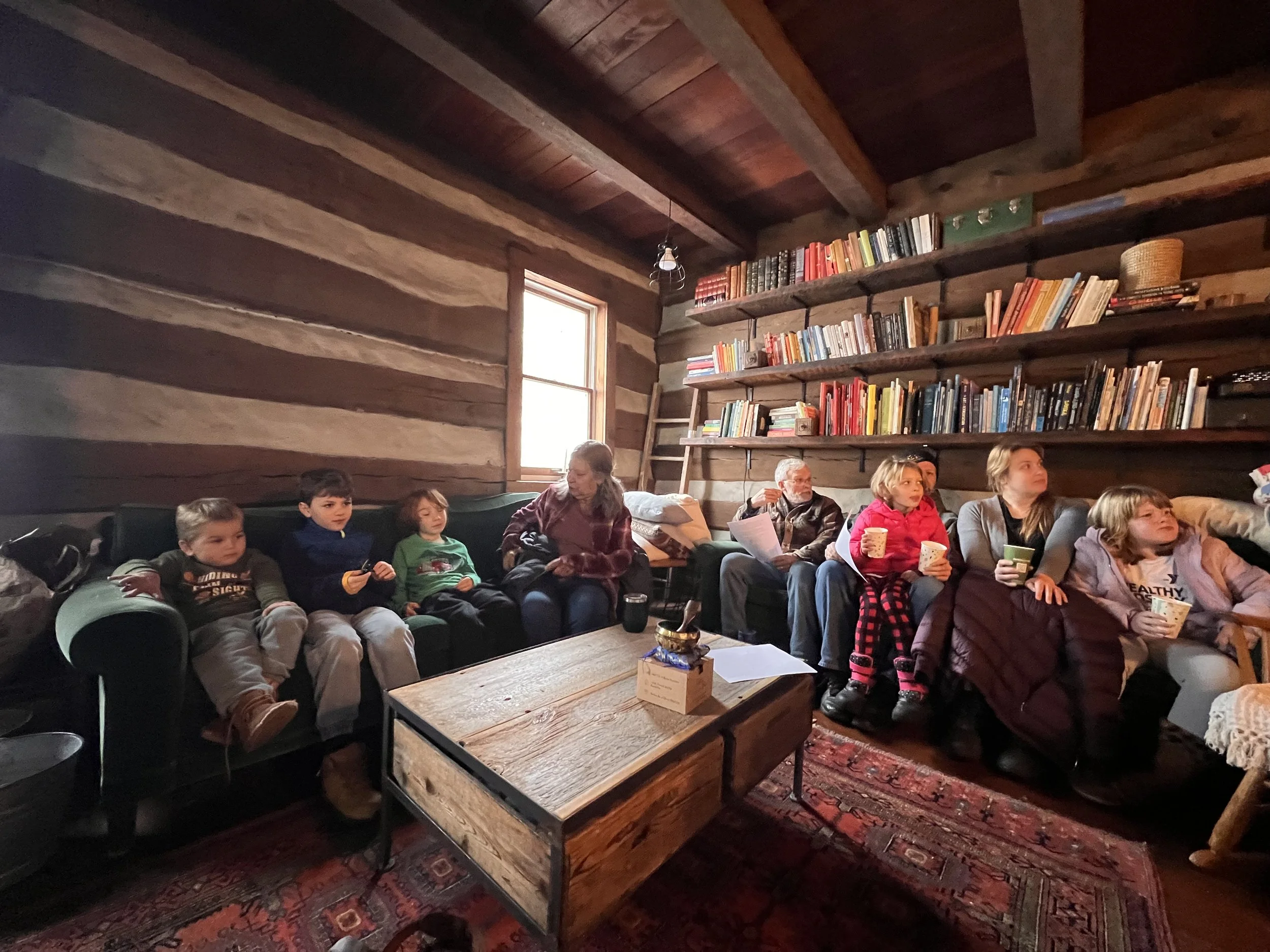
Children and adults listening to Evan tell a story about St. Nick
There were seven year olds and 75 year olds gathered together and participating in prayer and story telling. I’m not sure what folks thought of eating acorns when I shared about the after dinner activity for this month. Acorns represent natures abundance but they aren’t something we eat in our 21st century world. The reality is that our forests provide millions… billions… of extra calories for wildlife and potentially for humans. Acorns represent God’s abundance to me. Some years, called a mast year, oak trees communicate with one another that its a good year to produce huge crops of acorns. These years the trees provide a feast for wild turkeys, deer, squirrels, black bear and many other forest creatures. Once I saw a black bear high up in an oak tree munching and crunching away. In centuries past our forests were also full of chestnuts, not today, but maybe again in the future we’ll harvest acorns and chestnuts each autumn.
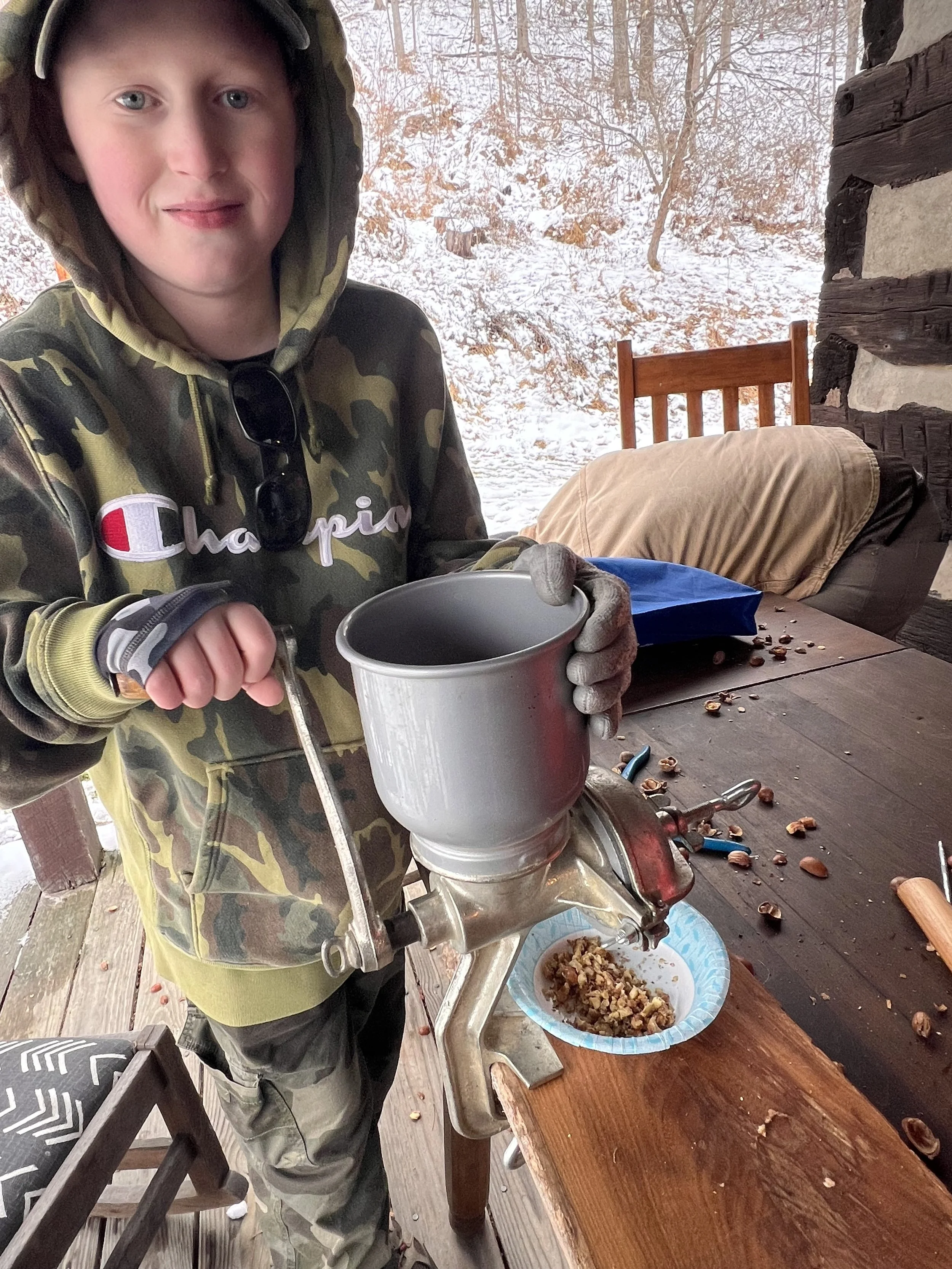
Working together to get our crop of acorns ready to be made into flour was a great, all ages, all abilities, activity. The work of our hands to create healthy food for one another is what we’re all about. The work of our hands was a celebration of God’s abundance in our lives as we close out 2025, as we look forward to the birth of Jesus, as we remember the generosity of Saint Nicholas of Myra.
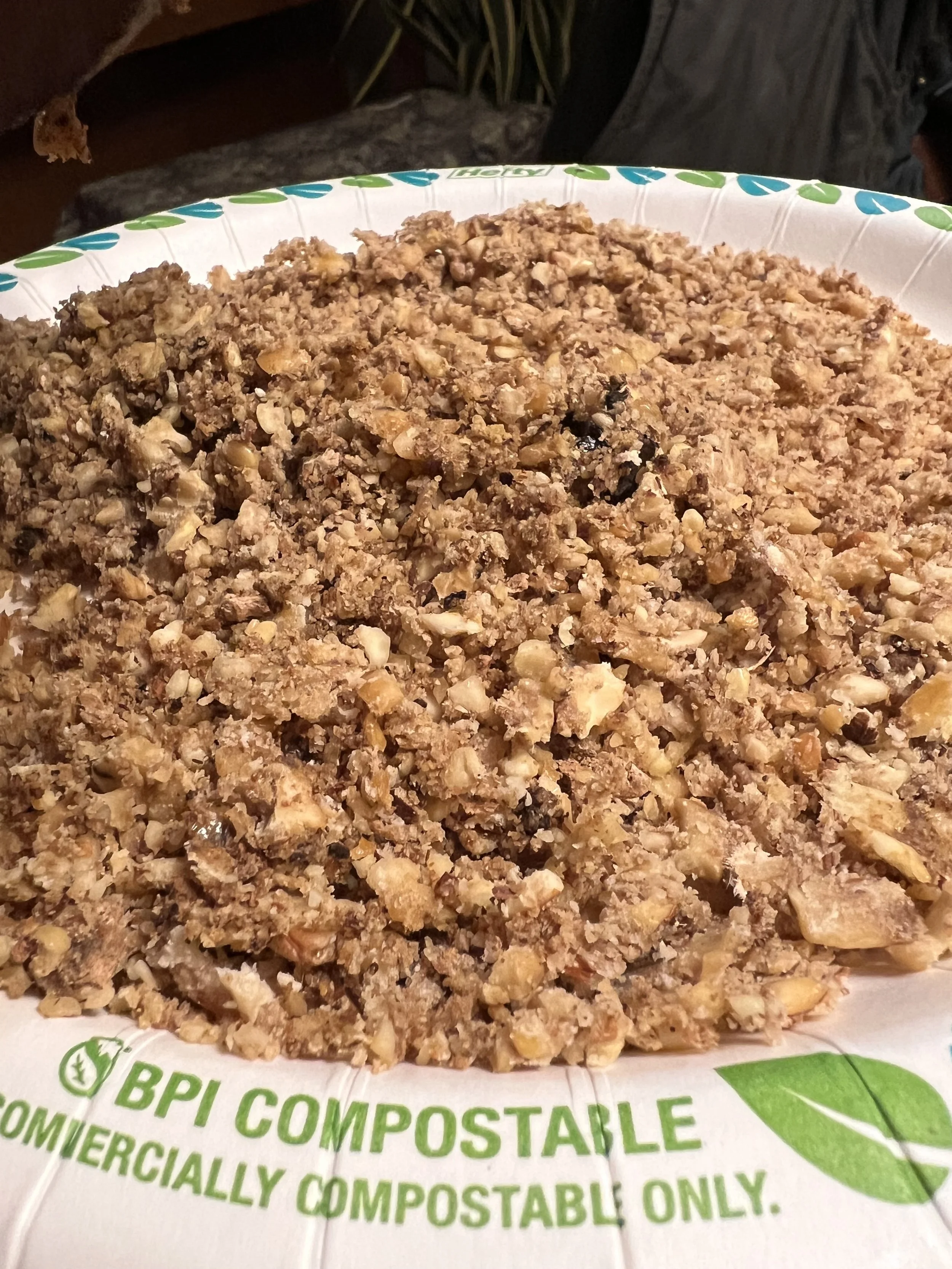
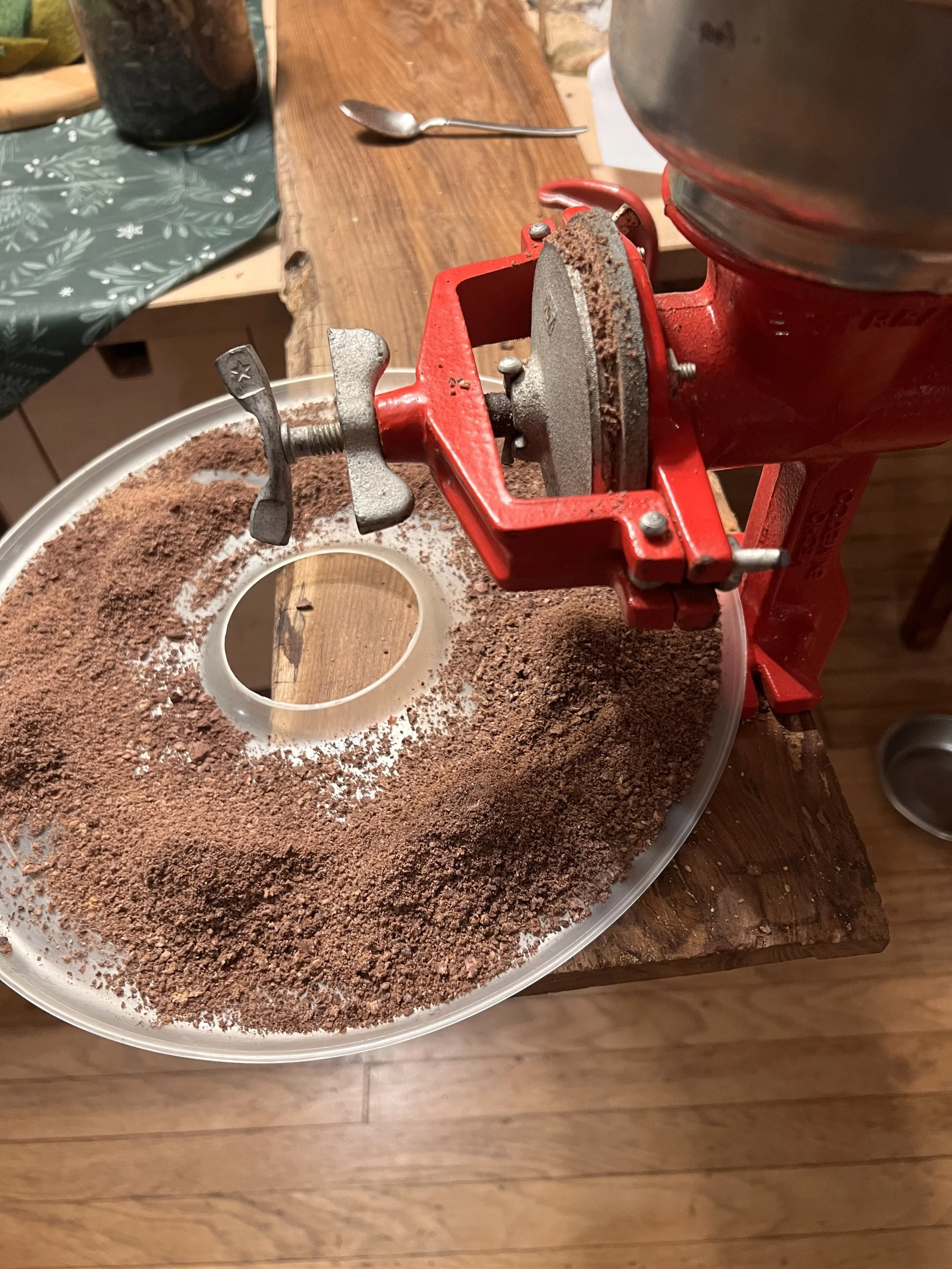
Acorns after the rough grind but before soaking.
Later Evan and my two sons continued this process in our dining room, removing the shells and grinding the acorns. And we still have so many acorns to go! Some for the goats and some will be planted.
It’s not hard but it takes time to process acorns and soak the tannins out of the nuts. The soaking happens after the process we did together last Saturday. It takes several days and many changes of water before the four is ready for its second grind. Tannins are very bitter and actually work as an anti-nutrient in the human body, absorbing nutrients from the body. Tannins have to be removed before we can eat them, not so for all those other creatures. But, after leaching out the tannins acorns provide healthy unsaturated fats, protein, calories and lots of nutrients. It’s one thing to harvest wild greens or mushrooms from the forest, acorns and other nuts can provide the foundation of calories we need.
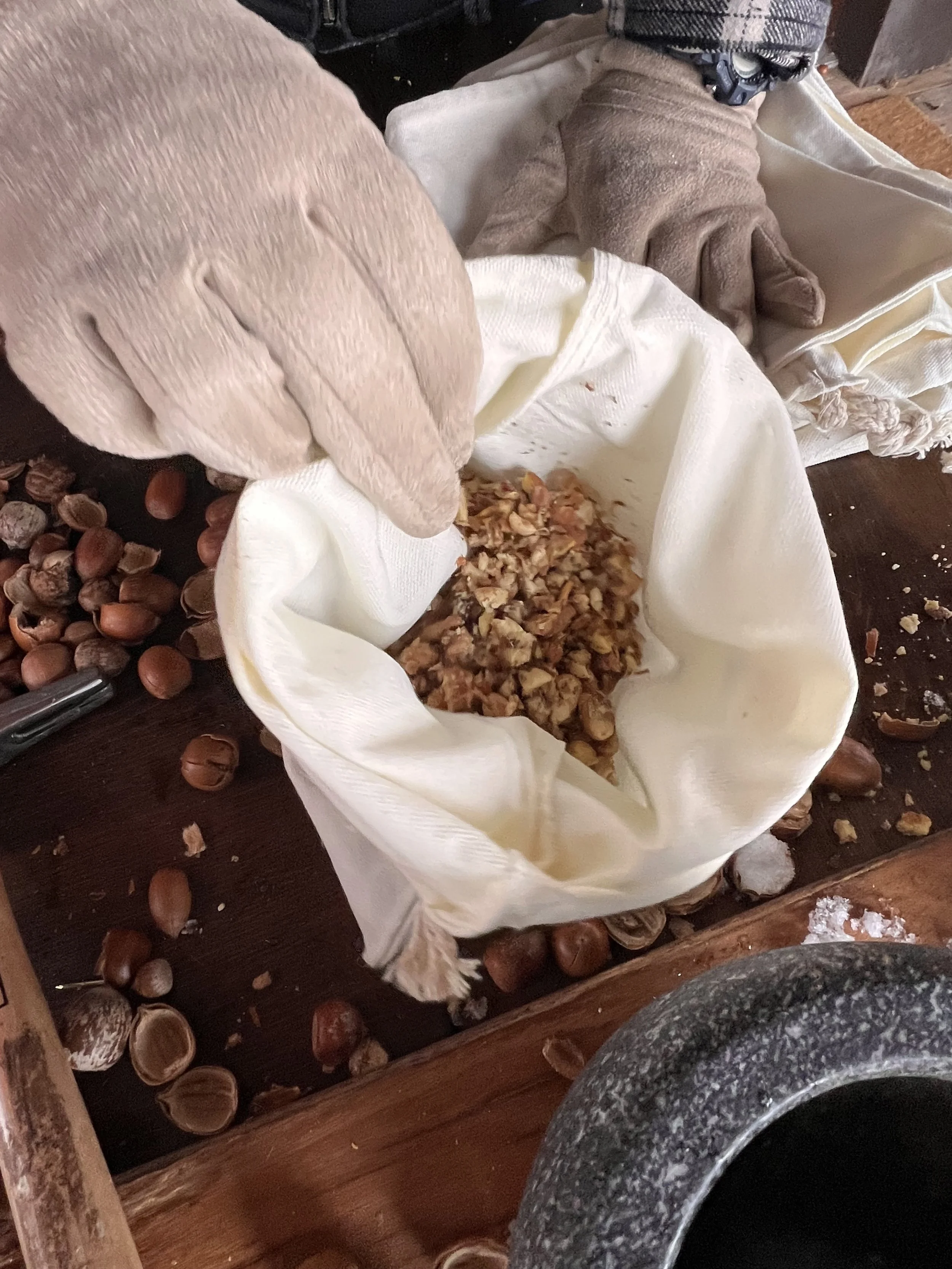
Acorns ready for soaking to remove the tannins.
Here’s our process we used to make flour.
Crack the acorn shells. I like to us a mortar and pestle. We also tried out hammers and pliers, but the mortar and pestle was by far my favorite. The shells crack easily and the net can be removed pretty easily. Some nuts are discovered or even black. Throw those ones out. If there’s a worm, that’s ok, just toss that one into the woods too.
Course grinding of nuts. After the shells are removed we put the nuts into a hand cranked flour grinder. I bought my in a tiny village in rural Mexico. Its for grinding corn to make tortillas, but it’s great for this too. I adjusted the grind so the nuts are still a little chunky, but pretty small. I don’t want fine flour yet. We tried it and the found the finely ground nuts are harder to handle during the leaching process.
Leaching the tannins. We’ve tried two methods of cold leaching the acorns to remove the tannins. One option is to put the ground acorns in a muslin bag and soak them in a bucket of water. We change the water twice a day. This seems to work well, it’ll take about six days. The second method is to use a mason or fido jar. Just put the acorns inside with water. I then strain the water out twice a day using cheese cloth over the top of the jar. This is easy and seems to work even better and getting the tannins out.
Drying the ground nuts. We use a dehydrator to dry the nuts. We’ll also try out the mantle over the wood stove.
Fine grinding of the acorns. Finally, I put the acorns back in the mortar and ground them finely, making perfect flour!
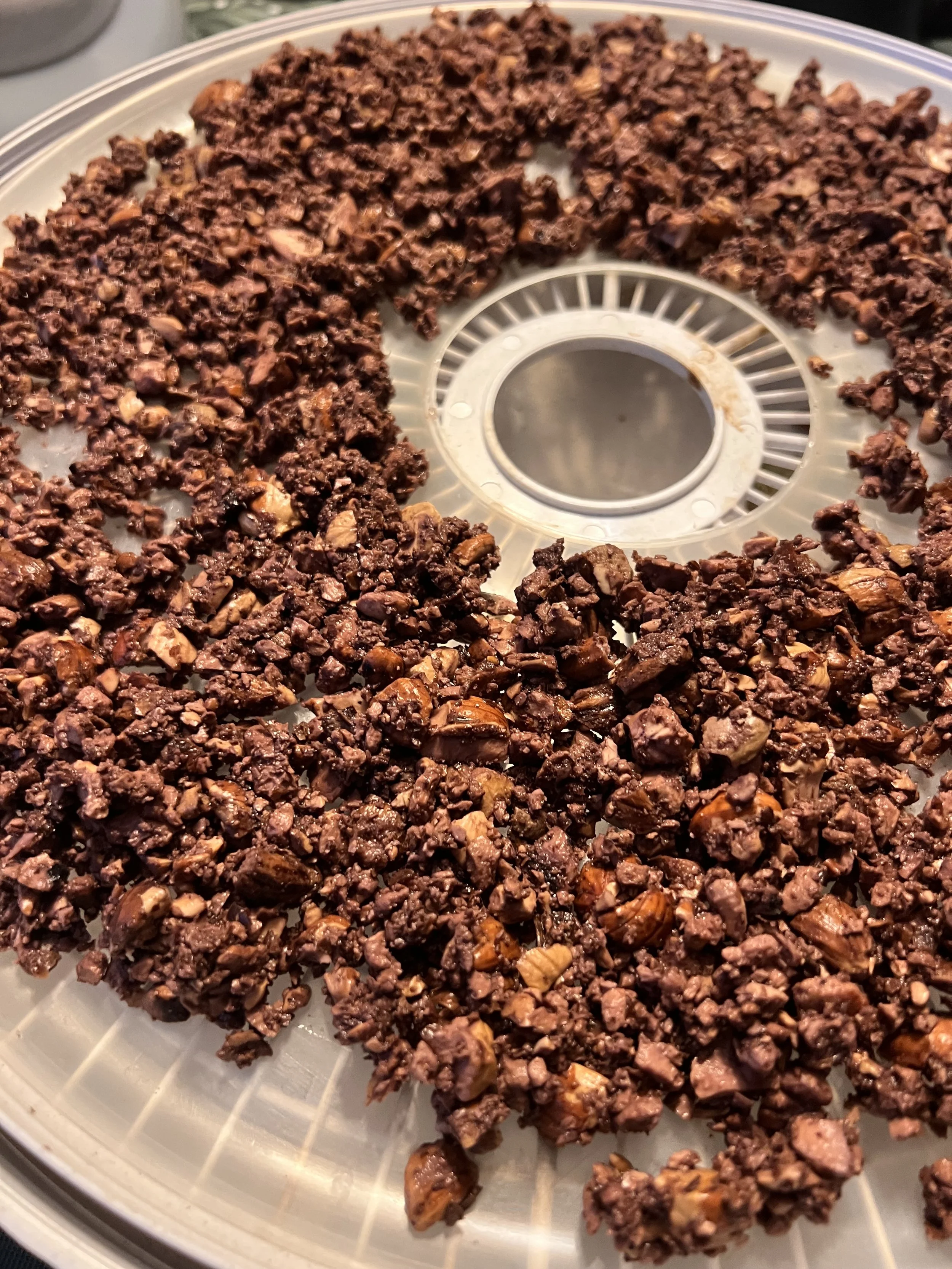
Acorns after being shelled, roughly ground and soaked for six days to remove the tannins. Now ready to be dried in the dehydrator.
Our first attempt at pancakes was a huge success, meaning both of my teenage boys liked them. I simply mixed the acorn flour with a gluten free pancake flour. It worked really well at 1:1 ratio and at a 1:2 ratio as well as a 2:1! meaning the acorn flour is really versatile and tastes great.
Finely ground and ready for use!